
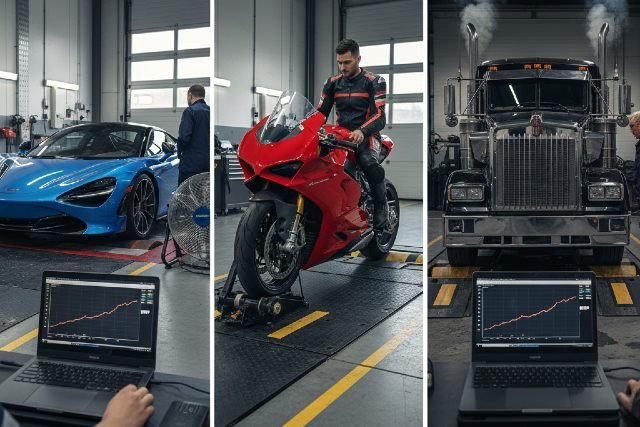
An accurate bhp check is one of the most reliable ways to understand a vehicle’s real performance. Whether you own a car, motorcycle, or commercial truck, knowing the true brake horsepower helps you evaluate engine health, verify manufacturer claims, and make informed decisions about tuning or purchasing. Many vehicle owners rely solely on brochure figures, but real-world power output often differs due to mechanical losses and operating conditions.
In this detailed guide, you will learn how a bhp check works, how it differs across cars, bikes, and trucks, and which methods provide the most accurate results in everyday conditions.
What Is Brake Horsepower (BHP)?
Brake horsepower, commonly known as BHP, measures the engine’s power output at the crankshaft before power is lost through components such as the gearbox, driveshaft, or wheels. This measurement represents the engine’s theoretical maximum performance rather than the power that actually reaches the road.
Manufacturers use BHP figures to market vehicles, but these values are typically measured under controlled laboratory conditions. This is why a real-world bhp check may show lower numbers than expected.
Why an Accurate BHP Check Is Important
An accurate bhp check helps determine whether a vehicle is performing as intended. Over time, engines naturally lose power due to wear, carbon buildup, or poor maintenance. Power loss can also occur after unauthorized ECU changes or low-quality modifications.
For buyers of used vehicles, a bhp check can reveal hidden mechanical issues. For performance enthusiasts, it confirms whether upgrades like remapping or exhaust systems deliver genuine gains. In commercial trucking, consistent BHP levels are essential for fuel efficiency and regulatory compliance.
Difference Between BHP, HP, and Wheel Horsepower
BHP and HP are often used interchangeably, but technically, BHP refers to power measured at the engine, while HP is a general term for power output. Wheel horsepower measures the power delivered to the wheels after drivetrain losses.
A bhp check focuses on engine output, while most real-world tests measure wheel horsepower and calculate BHP by accounting for drivetrain efficiency. Losses typically range from ten to twenty-five percent depending on vehicle type and drivetrain configuration.
How a BHP Check Works for Cars
For cars, the most common method of performing a bhp check is through a chassis dynamometer test. The vehicle is placed on rollers and run through its RPM range while sensors measure torque and wheel power. Software then estimates BHP based on drivetrain loss assumptions.
Engine dynamometer testing offers higher accuracy because it measures power directly at the crankshaft, but it requires engine removal and is usually limited to professional testing facilities. For most car owners, a rolling road dyno provides an accurate and practical solution.
Accurate BHP Check for Motorcycles
Motorcycles generally experience less drivetrain loss than cars, making their bhp check results closer to manufacturer figures. Chain-driven motorcycles typically lose less power compared to shaft-driven models.
A motorcycle bhp check is usually performed using a bike-specific chassis dynamometer. This method provides consistent and repeatable results, especially for performance bikes where small power differences can significantly affect acceleration and top speed.
BHP Check for Trucks and Heavy Vehicles
Trucks require specialized equipment due to their size and high torque output. A professional bhp check for trucks may involve heavy-duty chassis dynamometers or engine control module diagnostics.
Fleet operators often perform regular BHP verification to ensure engines operate efficiently under load. Even small reductions in horsepower can significantly impact fuel consumption and long-term operating costs.
Online BHP Check Tools and Their Accuracy
Online bhp check calculators estimate power output based on vehicle weight, acceleration data, or engine specifications. While these tools provide quick estimates, they cannot account for real-world variables such as drivetrain condition, tire grip, or environmental factors.
These calculators are best used as reference tools rather than replacements for professional testing. For accurate results, physical testing remains the most reliable option.
Why BHP Results Vary from Manufacturer Claims
Manufacturer-rated BHP figures are measured under ideal conditions that rarely reflect everyday driving. Factors such as altitude, temperature, fuel quality, and emissions restrictions can all influence a vehicle’s actual power output.
A professional bhp check accounts for these variables, offering a more realistic view of engine performance. Variations of five to ten percent are generally considered normal.
Improving BHP After a Performance Test
If a bhp check reveals lower-than-expected power, the issue may be resolved through proper maintenance or targeted upgrades. Dirty air filters, worn spark plugs, or outdated engine software can all reduce performance.
Performance tuning, when done correctly, can restore or increase BHP, but it should always comply with manufacturer guidelines and emissions regulations to avoid long-term damage.
Real-World Example of a BHP Check
A turbocharged sedan rated at 250 BHP may show around 205 wheel horsepower during testing. After accounting for drivetrain losses, the estimated BHP may be closer to 238, which falls within acceptable limits. This confirms the engine is operating efficiently and does not require immediate mechanical attention.
Frequently Asked Questions About BHP Check
A bhp check is safe for the engine when performed by trained professionals using calibrated equipment. Most vehicles only require testing once every few years unless performance issues arise or modifications are installed. Home-based tools can estimate BHP, but professional testing provides the most reliable data.
Conclusion
An accurate bhp check provides essential insight into a vehicle’s true performance, whether it is a car, bike, or truck. By understanding how BHP is measured and why real-world results differ from advertised figures, vehicle owners can make smarter decisions about maintenance, tuning, and purchases.
Regular BHP testing ensures transparency, efficiency, and long-term reliability. If performance matters to you, a professional bhp check is one of the most valuable tools available.