
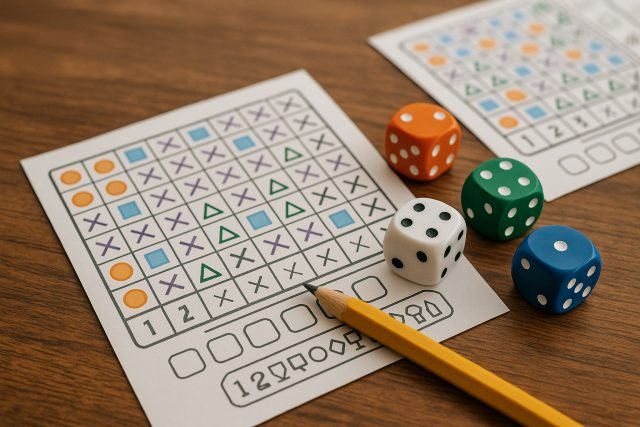
What Are Roll and Write Games?
In recent years, roll and write games have rolled their way into the spotlight, becoming one of the fastest-growing genres in tabletop gaming. These games combine the excitement of dice rolling with the strategy of careful planning, all condensed into a simple, portable format. From Yahtzee to Welcome To… and Ganz Schön Clever, this genre appeals to casual players and hobbyists alike.
But what exactly makes roll and write games so popular? And how did they rise from simple family games to the darlings of modern board gaming? Let’s explore why everyone — from seasoned gamers to newcomers — loves them.
What Makes Roll and Write Games Special?
Unlike many modern board games that involve hundreds of pieces or complex rules, roll and write games thrive on simplicity and replayability. Players roll dice (or flip cards) and then write results on a sheet, aiming to maximize points through strategic choices.
Key Features of Roll and Write Games
- Quick setup and cleanup: No need to unbox miniatures or shuffle dozens of cards.
- Compact and portable: Perfect for travel, coffee shops, or game nights on the go.
- Simultaneous play: Everyone plays at once, reducing downtime.
- Endless variety: From city building (Welcome To…) to dungeon crawling (Twilight Inscription).
These elements make roll and write games both accessible and addictive.
A Brief History of Roll and Write Games
The concept isn’t new — in fact, it traces back decades.
- 1956: Yahtzee introduced millions to the roll-and-score mechanic.
- 2000s: Hobby designers began reimagining the format with thematic twists.
- 2010s: Games like Qwixx and Ganz Schön Clever ushered in a “Roll and Write Renaissance.”
Today, publishers are innovating with digital apps, campaign systems, and even “flip and write” variations using cards instead of dice.
Why Everyone Loves Roll and Write Games
1. Easy to Learn, Hard to Master
Most games explain the rules in minutes — but mastering the scoring takes real skill. This balance appeals to both beginners and competitive players.
2. Perfect for Solo and Group Play
Many titles offer solo modes or scale effortlessly for groups of any size. Whether you’re playing on a lunch break or hosting game night, roll and write games fit the occasion.
3. Affordable and Accessible
With most games priced between $10 and $30, they’re among the most budget-friendly tabletop experiences. All you need is a pen and dice — sometimes not even that, thanks to digital versions.
4. Endless Replayability
Because dice results and strategy choices vary every round, no two games ever feel the same. Some even include laminated boards or dry-erase sheets, so you can play indefinitely.
Popular Roll and Write Games Worth Trying
Here’s a look at some standout titles:
| Game Title | Type | Player Count | Why It’s Popular |
|---|---|---|---|
| Welcome To… | Flip and Write | 1 – 100 | Strategic city-building with endless combos |
| Ganz Schön Clever | Roll and Write | 1 – 4 | Smart combos and satisfying scoring |
| Railroad Ink | Dice and Draw | 1 – 6 | Beautiful visuals and modular expansions |
| Twilight Inscription | Epic Roll and Write | 1 – 8 | Deep strategy and sci-fi theme |
| Next Station: London | Flip and Write | 1 – 4 | Fast, fun, and perfect for families |
Pro Tip: Start with Qwixx if you’re new to roll and write games — it’s fast, intuitive, and great for teaching the genre.
The Rise of “Flip and Write” Variants
As designers push boundaries, flip and write games (which use cards instead of dice) have surged in popularity. They allow for greater control and thematic variety while keeping the same satisfying gameplay.
Examples include:
- Cartographers — a map-drawing adventure set in a fantasy world.
- Welcome To… — turn over cards to build your dream neighborhood.
Both appeal to fans seeking strategic depth with minimal luck.
How Roll and Write Games Foster Connection and Creativity
In an increasingly digital world, tabletop experiences offer genuine human connection. Roll and write games do this beautifully:
- Shared excitement: Everyone cheers (or groans) together when dice land.
- Creative expression: Many games let players design cities, maps, or networks.
- Low intimidation factor: Easy rules make them great for mixed-age groups.
According to BoardGameGeek’s 2024 Player Trends Report, roll and write titles appear in over 30% of households that play board games regularly — a testament to their universal appeal.
The Future of Roll and Write Games
Expect the trend to continue as publishers innovate with hybrid mechanics, app integration, and campaign systems that track progress over time. Games like Hadrian’s Wall blend eurogame depth with roll and write simplicity — a sign of where the genre is headed.
Moreover, educational and corporate teams are adopting these games for training, brainstorming, and engagement, proving their versatility beyond entertainment.
FAQs About Roll and Write Games
What’s the difference between roll and write and flip and write?
Roll and write games use dice, while flip and write games use cards. Both involve recording results to score points strategically.
Are roll and write games good for beginners?
Absolutely. They’re simple to learn, fast to play, and usually inexpensive — perfect for newcomers.
Can you play roll and write games solo?
Yes. Many games include solo modes, and even multiplayer ones can easily be adapted for single-player challenges.
What equipment do you need?
Usually just dice, score sheets, and something to write with — some modern titles even include reusable boards or apps.
Conclusion: Why the World Can’t Get Enough of Roll and Write Games
From living rooms to board game cafés, roll and write games are here to stay. They deliver strategy without stress, community without complexity, and fun without a massive time commitment.
Whether you’re a casual player or a board game enthusiast, there’s a roll and write game that fits your style — and once you start, you’ll understand exactly why everyone loves them.