
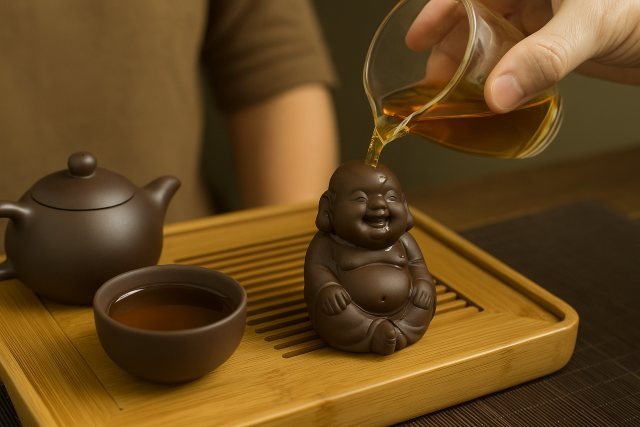
What Is a Tea Pet?
A tea pet is a small clay figurine, often placed on a tea tray during traditional Chinese tea ceremonies. Typically made from Yixing clay (zisha), tea pets are not just decorative — they carry cultural meaning, symbolism, and are believed to bring luck, prosperity, and mindfulness to tea drinkers.
During the tea ceremony, tea lovers pour leftover tea over the tea pet as an act of care, friendship, and ritual cleansing. Over time, this process deepens the color and texture of the tea pet’s clay, creating a unique patina — much like the aging of a cherished teapot.
The History and Origins of the Tea Pet
Ancient Roots in Yixing, China
The history of the tea pet dates back to the Song Dynasty (960–1279 CE) — the golden age of Chinese tea culture. Yixing artisans in Jiangsu Province began crafting small clay sculptures using the same purple sand clay used for teapots.
Originally, these figurines were test pieces for checking clay quality and firing temperatures in kilns. But over time, they evolved into companions for tea lovers, embodying emotion, spirit, and personal taste.
Symbolism Across Dynasties
By the Ming and Qing Dynasties, tea pets had become common in literati tea circles. Each figurine carried a symbolic meaning — for example:
| Tea Pet Symbol | Meaning | Cultural Significance |
|---|---|---|
| Pig | Wealth and prosperity | Common among merchants |
| Dragon | Strength and good fortune | Favored by scholars |
| Three-legged toad (Jin Chan) | Money and abundance | Feng Shui charm |
| Turtle | Longevity and wisdom | Symbol of endurance |
| Cat | Protection and curiosity | Modern favorite |
The Meaning Behind a Tea Pet
The meaning of a tea pet goes beyond simple decoration. It represents companionship, patience, and spiritual growth — virtues that echo the philosophy of tea itself.
- Mindfulness and Ritual – Caring for a tea pet reminds the tea drinker to slow down and appreciate the moment.
- Personal Expression – Each tea pet reflects the owner’s personality or values.
- Symbol of Prosperity – Some tea pets are believed to attract wealth and positive energy.
- Good Fortune – Pouring tea on your pet is said to nurture good luck, similar to tending to a bonsai or koi pond.
In essence, a tea pet is a silent friend who grows old gracefully with you through years of shared tea sessions.
How to Use a Tea Pet Properly
Step-by-Step Guide
Using a tea pet is both simple and deeply meaningful. Here’s how to incorporate it into your tea practice:
- Choose Your Tea Pet
Select a tea pet made from authentic Yixing zisha clay. Choose one that resonates with your spirit — whether it’s a lucky toad, Buddha, or playful animal. - Rinse Before Use
Before its first use, rinse the tea pet with warm water to remove dust and prepare the clay. - Place It on the Tea Tray
Set your tea pet near the teapot or pitcher, allowing excess tea to flow naturally over it. - Pour Leftover Tea
As you brew tea, pour a bit of the leftover tea or rinse water over your tea pet. Avoid using boiling water directly — use warm tea instead. - Watch It Age Gracefully
Over time, the tea pet absorbs tea oils, developing a shiny, smooth surface that reflects care and attention.
Caring Tips for Your Tea Pet
- Use the same type of tea regularly to ensure even color development.
- Wipe gently with a soft cloth — never use soap or chemicals.
- Avoid soaking in water for long periods.
- Store in a dry, ventilated area when not in use.
Types of Tea Pets and Their Meanings
| Type of Tea Pet | Description | Common Meaning |
|---|---|---|
| Lucky Toad (Jin Chan) | A three-legged toad holding a coin | Wealth, prosperity |
| Laughing Buddha | Jolly monk with a big smile | Happiness and abundance |
| Dragon Turtle | Hybrid of dragon and turtle | Success and longevity |
| Pig or Elephant | Cute, rounded figurines | Fertility and luck |
| Mini Teapot or Gourd | Symbolic shapes | Simplicity and nature |
| Custom Modern Tea Pets | Characters, cats, or dragons | Personal expression |
Fun Fact: Some Tea Pets “Move”!
Certain tea pets are interactive, designed to respond to hot tea. When you pour tea on them, they change color, release steam, or even squirt water from their mouths.
For example, the “Pee-Pee Boy” tea pet is a classic. You soak it in cold water, then pour hot tea on it — and it sprays a thin stream of water! Traditionally, it was used as a playful temperature tester for tea water.
The Spiritual Side of Tea Pets
Tea culture in China is deeply connected to Daoist and Zen Buddhist philosophy. The tea pet serves as a reminder of:
- Harmony between humans and nature
- Gratitude for small joys
- Transience — everything changes, just like the tea pet’s surface with time
When you pour tea over your tea pet, you are not just performing a ritual — you are honoring tradition, mindfulness, and connection.
Modern Tea Pet Trends
Today, tea pets are enjoyed worldwide — not only by tea masters but by casual tea drinkers and collectors.
Modern artisans are creating innovative designs:
- Minimalist or abstract forms
- Pop-culture inspired figures (like cats, dragons, and anime characters)
- Custom handmade clay animals available on platforms like Etsy or Taobao
These designs blend ancient ritual with modern creativity, making tea pets a perfect gift for tea lovers or collectors.
Frequently Asked Questions About Tea Pets
What is the purpose of a tea pet?
A tea pet is a small clay figurine used during tea ceremonies for decoration, mindfulness, and luck. Tea lovers pour tea over it as a ritual of care.
Can I use any type of tea on my tea pet?
Yes, but for best results, use the same tea type consistently (e.g., oolong or pu-erh) to create an even patina.
How long does it take for a tea pet to develop shine?
Typically, after 3–6 months of regular use, your tea pet will begin to develop a subtle, natural luster.
Are tea pets only for Chinese tea?
No! While traditional to Chinese tea culture, many tea drinkers around the world now use tea pets during Gongfu-style or personal tea sessions.
Conclusion: A Tea Pet Is More Than a Figurine
A tea pet is a living symbol of patience, mindfulness, and connection. As you pour tea over it daily, you’re not just feeding clay — you’re nurturing tradition, energy, and calm.
Whether you’re a seasoned Gongfu tea enthusiast or a beginner exploring Chinese tea culture, adopting a tea pet will enrich your experience and remind you to slow down, sip mindfully, and find joy in simplicity.