
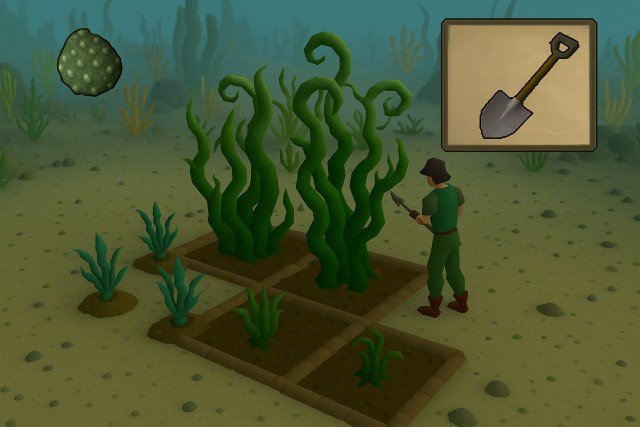
If you’re playing Old School RuneScape (OSRS) and wondering about the best strategies around seaweed spore OSRS, you’ve come to the right place. These seeds play a key role in underwater farming on Fossil Island, yield the valuable giant seaweed crop, and support crafting high-level items and XP gains. This article will walk you through how to get, how to grow, and how to use seaweed spores efficiently — covering methods, tips, and everything you need to know.
What is a Seaweed Spore in OSRS?
A seaweed spore is a farming seed in OSRS that can be planted in the special seaweed patch located in the underwater section of Fossil Island.
Here are the basics:
- Requires Farming level 23 to plant.
- After planting, the crop grows into giant seaweed, usually in about 35-40 minutes.
- Giant seaweed is used for crafting (e.g., using the Superglass Make spell) and other useful items.
- The seaweed patch has special rules (e.g., compost does not affect minimum harvest lives like with herbs).
So when you see “seaweed spore OSRS” in guides, they’re referring to this precise seed item and its mechanics.
Why Farming Seaweed Spores is Worthwhile
There are several compelling reasons to collect and use seaweed spores in your OSRS gameplay:
- Efficient Crafting & XP gains: Giant seaweed yields a large volume of material that can be converted into molten glass. For example, one calculator shows you can get about ~8.7 molten glass per giant seaweed under certain setups.
- Accessible Farming Level: At level 23 Farming, this method is available relatively early compared to some high-level skilling content.
- Passive and active methods: Whether you prefer AFK or active gameplay, there are options to obtain spores.
- Ironman Friendly: For Ironman accounts (self-sufficient mode), seaweed spores are a strong resource for crafting and gathering materials without relying on Grand Exchange purchases.
How to Get Seaweed Spores OSRS
Main Methods
Here are the major ways to obtain seaweed spores, from easiest to more intensive:
| Method | Requirements | Approximate Yield & Notes |
|---|---|---|
| Random spawn while diving | Be in shallow water underwater Fossil Island with diving gear. | Spores spawn occasionally: around 1 % chance per tick, 1-3 spores each time. Relatively AFK. |
| Killing monsters | Defeat monsters like Lobstrosities, Ammonite Crabs, Wyverns on Fossil Island. | For instance: Lobstrosities drop ~5 spores at ~1/20 rate (5%). Ammonite Crabs ~1/128 rate. |
| Pickpocketing Master Farmers | Thieving level required (~38) and a bit of luck. | Very low drop rate (~1/2200). Useful as supplemental method. |
| Purchasing via Mairin’s Market | Underwater area on Fossil Island, use Mermaid’s Tears. | Cost: ~20 Mermaid’s Tears per spore. Reliable alternative if you have the tears. |
Step-by-step: Random Spawn Method
- Equip diving gear: fishbowl helmet, diving apparatus, flippers, oxygen tank.
- Travel to the underwater section of Fossil Island (accessible via quest “Bone Voyage”).
- Swim in the shallow section near the seaweed patches, idle or perform a bank-skill like alching or fletching.
- Watch for spawn with an item on the ground (1-3 spores), click quickly – they despawn after ~30 seconds.
- Repeat until you’ve built up the number of spores you need.
Tips to Improve Efficiency
- Use a ground item notifier (in clients such as RuneLite) to spot spawns faster.
- Combine spore gathering with another skill (e.g., alching, fletching) to make the time more productive.
- If engaging in combat methods (Lobstrosities, etc.), bring high-gear and optimize kill speed to maximize drop rate.
How to Grow Giant Seaweed from Seaweed Spores OSRS
Once you’ve obtained seaweed spores, planting and harvesting become the next steps.
Planting Guide
- Head to the seaweed patch in the underwater area of Fossil Island (again, access via Bone Voyage).
- Farming level required: 23.
- Use your seaweed spore on the patch.
- Optionally pay 200 numulites to Mernia to protect the crop patch from disease (though giant seaweed doesn’t have minimum-lives affected by compost like herbs).
- Wait approximately 35-40 minutes for the crop to mature.
Harvesting Yield & Considerations
- Minimum harvest lives unaffected by compost, but average yield is increased with compost/ultracompost.
- Typical yields: depending on Farming level and compost quality, you may see 20-40 giant seaweed per patch.
- After harvesting, you can replant another spore (if you have one) to continue the cycle.
Table: Farming Yield vs Compost Type
| Compost Type | Approximate Lives/Yield* |
|---|---|
| No compost | Low yield (8-16 seaweed) |
| Supercompost | Medium yield |
| Ultracompost | High yield (20-40+ seaweed) |
*Actual yields vary by Farming level and RNG.
How to Use Giant Seaweed (From Seaweed Spore OSRS)
After harvesting giant seaweed, there are several productive ways to use it.
Crafting & Molten Glass
- Giant seaweed can be used in conjunction with buckets of sand to craft molten glass via the Superglass Make spell.
- According to a giant seaweed calculator: e.g., 2 giant seaweed + 12 sand yields ~1.45 molten glass per sand.
- This makes it a valuable route for Crafting XP and glass-related items.
Soda Ash & Other Products
- Giant seaweed can be cooked into 6 soda ash, which is used in various Runescape crafting processes.
Pet Chance (For Skilling Enthusiasts)
- Harvesting giant seaweed has a chance for the rare pet Tangleroot. This adds an extra incentive for dedicated skilling.
Choosing the Best Method: Which Approach Suits You?
Here’s a quick decision-table to help choose your optimal seaweed spore OSRS method:
| Playstyle | Best Method | Why |
|---|---|---|
| Ironman, multitasking | Random spawn while diving | Low effort, passive, supports other skills |
| Combat-focused gameplay | Kill Lobstrosities / Wyverns | Higher spore drops, integrate with Slayer tasks |
| Thieving/Skilling focused | Mairin’s Market / pickpocket | Non-combat, uses Thieving/Agility |
| Early game / low combat levels | Ammonite Crabs on Fossil Island | Low requirement monster for spores |
Common FAQs: Seaweed Spore OSRS
Q: What Farming level do I need for seaweed spores?
A: You must have at least Farming level 23 to plant a seaweed spore in the patch on Fossil Island.
Q: Can I buy seaweed spores from the Grand Exchange?
A: The Grand Exchange lists the item price, but availability may vary. The in-game price was shown at around ~40 GP in the database.
Q: Does compost affect the minimum harvest for giant seaweed?
A: No — the minimum lives of the giant seaweed patch are not affected by compost, though compost/ultracompost increases average yield.
Q: How long does it take to grow giant seaweed from a seaweed spore?
A: Roughly 35-40 minutes from planting to harvest.
Q: Is the seaweed patch underwater dangerous? What gear do I need?
A: You need diving gear: a fishbowl helmet, diving apparatus, flippers, and an oxygen tank to safely spend time underwater. Also complete the quest to access the underwater area on Fossil Island (Bone Voyage).
Pro Tips & Advanced Strategies
- Use Ultracompost to maximize yield per spore — especially useful if you are trying to minimize seed usage.
- Combine the dive/spore spawn method with another activity (like alching items or fletching) to make time more efficient.
- When killing monsters (Lobstrosities/Wyverns) for spores, kill near the seaweed patches so you can plant immediately after harvesting.
- Keep a stock of ~50-100 spores to maintain uninterrupted harvesting cycles — once you have this, the spore supply becomes fairly self-sustaining.
- If you’re Ironman, avoid relying too much on purchasing spores (via Mermaid’s Tears) unless you already have a sizable tear stockpile.
- Monitor the Grand Exchange price of seaweed spores and giant seaweed to see if it’s worthwhile for non-Ironman accounts to buy rather than farm.
Conclusion
In the world of Old School RuneScape, mastering seaweed spore OSRS opens up a dependable route for farming significant materials, gaining Crafting and Farming XP, and supporting versatile gameplay styles. Whether you’re an Ironman grinding for self-sufficiency or a main account player optimizing your skilling path, the seed mechanics, patch location, and yield potential make this an excellent long-term investment.
Start by obtaining a solid supply of spores, next plant them in the seaweed patch, and then convert the giant seaweed into crafting goods or XP. With the right setup, you’ll find yourself harvesting dozens of giant seaweed and reaping the benefits of your underwater farming efforts.