
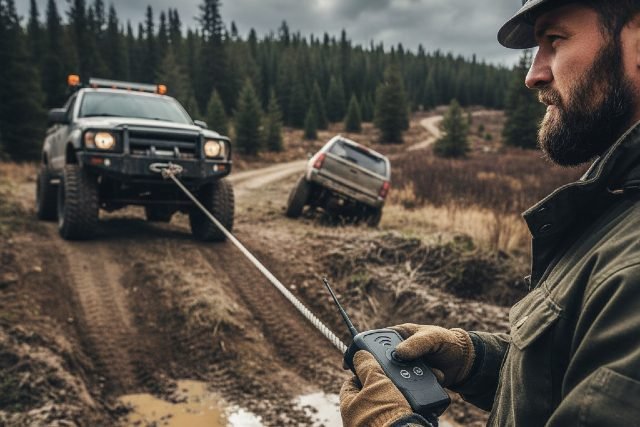
A wireless winch remote has quickly become one of the most essential recovery accessories for off-roaders, tow operators, and anyone who regularly uses a winch. Whether you’re stuck in deep mud, climbing rocky terrain, or recovering another vehicle, a wireless remote improves safety, mobility, and control dramatically. This guide explores the top benefits of using a wireless winch remote for safe recovery, along with expert tips and real-world examples to help you choose the right one.
What Is a Wireless Winch Remote?
A wireless winch remote is a device that allows you to control your winch — engage, disengage, spool in, and spool out — without needing physical wiring between you and the winch. These remotes typically use RF (radio frequency) or Bluetooth technology to offer reliable communication over long distances.
How It Works
- A receiver is connected to your winch.
- The remote communicates wirelessly with the receiver.
- You operate the winch safely from a distance.
Top Benefits of Using a Wireless Winch Remote for Safe Recovery
1. Improved Safety in Hazardous Recovery Situations
Safety is the most critical advantage of switching to a wireless winch remote.
Why It Matters
During a recovery, the cable or synthetic rope can snap under tension. According to safety organizations, a failed winch line can travel up to 700 ft per second, posing a severe risk to the operator and bystanders.
(Reference: Off-Road Safety Academy)
How a Wireless Remote Helps
A wireless remote allows you to:
- Stand far away from the winch line’s “danger zone”
- Operate from inside your vehicle if necessary
- Avoid tripping over wires or getting tangled during recovery
Key safety benefit: You stay safely out of harm’s way while maintaining full operational control.
2. Greater Mobility and Freedom of Positioning
Wired remotes typically limit your movement to 8–12 feet. That’s often not enough for safe visibility.
Wireless Remote Mobility Benefits
- Operate the winch from 30–100+ feet away, depending on model
- Move to a safe vantage point with better visibility
- Position yourself uphill, behind obstacles, or farther from the winch line
Real-World Scenario
When recovering a vehicle from a ditch, visibility is often poor. A wireless remote allows you to stand in a stable, elevated location where you can see the cable, anchor point, and vehicle — all without compromising safety.
3. Faster and More Efficient Recovery Operations
With a wireless remote, you eliminate the hassle of connecting wires, untangling cords, or searching for plug-in ports.
Efficiency Improvements
- Setup time is reduced
- You can reposition yourself instantly
- No need to move the controller cable between pulls
- Fewer connection failures from damaged wiring
This is especially helpful when performing multiple recoveries or working in harsh weather where cables can freeze, tangle, or snag.
4. Compatible With Most Winches
Most modern wireless winch remotes work with:
- Off-road vehicle winches
- ATV/UTV winches
- Trailer winches
- Boat winches
- Utility winches
They often come with universal or semi-universal receivers that integrate easily with the majority of popular brands like WARN, Smittybilt, Champion, and Badland.
Tip: Always check voltage compatibility (12V or 24V systems).
5. Reduces Wear and Tear on Winch Connectors
Wired remotes typically plug into a port on the winch or bumper. These ports can:
- Fill with dirt
- Corrode
- Break from repeated use
- Freeze in cold weather
A wireless setup eliminates frequent plugging/unplugging, extending the lifespan of your winch components.
6. Enhanced Control and Precision
Modern wireless winch remote systems offer:
- Slow-spool modes
- Instant response time (thanks to improved RF tech)
- Anti-interference shielding
- Automatic shut-off safety timers
These features provide smoother, more precise control, which is critical when performing technical recoveries where over-spooling could damage the winch or vehicle.
7. Eliminates Cable Management Issues
Wired remotes require careful handling:
- The wired controller can tangle in brush or limbs.
- Long wires can catch on rocks or objects.
- You may need extra hands to manage excess cable.
A wireless winch remote eliminates these problems altogether, streamlining the process and making your workspace safer and cleaner.
8. Works Well in Harsh Weather and Terrain
Quality wireless remotes are designed for rugged use. Many provide:
- IP67 or IP68 waterproof rating
- Dustproof housing
- Shock-resistant casing
- Heat and cold resistance
When you’re knee-deep in mud or standing in heavy rain during a recovery, a durable remote makes your job much easier.
9. Allows In-Cab Winch Control
This is a significant advantage for off-roaders.
In-Cab Operation Benefits
- Stay inside the vehicle during snowstorms or rain
- Maintain communication with passengers
- Keep warm and safe from external hazards
- Maintain control when navigating while winching (common in rock crawling)
Some drivers mount their remote on the dashboard for quick access.
Comparison Table: Wireless vs. Wired Winch Remotes
| Feature | Wireless Remote | Wired Remote |
|---|---|---|
| Safety | ★★★★★ (excellent distance) | ★★★☆☆ (limited by cord) |
| Ease of Use | ★★★★★ | ★★★☆☆ |
| Setup Speed | Fast | Medium |
| Range | 30–100+ ft | 8–12 ft |
| Durability | High | Dependent on weather & cable condition |
| Cost | Higher | Lower |
| Ideal For | Off-roading, towing, marine, utility | Occasional/light use |
Frequently Asked Questions (FAQ)
1. Are wireless winch remotes safe?
Yes — wireless remotes are safer because they allow you to operate the winch from a distance, keeping you away from the danger zone in case the line snaps.
2. What is the typical range of a wireless winch remote?
Most offer 30–100 feet, though premium models can exceed 150 feet.
3. Are wireless remotes reliable in bad weather?
High-quality units are waterproof, dustproof, and impact-resistant, making them reliable in rain, snow, and mud.
4. Can I use a wireless remote with any winch?
Generally yes, but always check compatibility with your winch’s voltage and wiring system.
5. Do wireless remotes have latency issues?
Modern RF remotes offer near-instant response times thanks to improved digital signaling.
Expert Tips for Choosing the Best Wireless Winch Remote
Look for an IP67 or IP68 Waterproof Rating
For mudding, snow wheeling, and water crossings.
Choose a Remote with Long Battery Life
Some offer rechargeable lithium batteries.
Ensure It Has a Manual Backup
A wired controller backup protects you if batteries fail.
Opt for Models with Signal Interference Protection
Critical if you use other wireless devices nearby.
Select a Remote with a Secure Locking Function
Prevents accidental activation.
Conclusion: Why a Wireless Winch Remote Is Essential for Safe Recovery
A wireless winch remote is one of the best upgrades you can make for safe and efficient vehicle recovery. With enhanced mobility, greater safety distance, faster setup, and improved precision, it completely transforms how you manage recovery operations. Whether you’re an off-road enthusiast, a professional tow operator, or someone who values reliable equipment, the benefits are undeniable.
Investing in a high-quality wireless remote isn’t just a convenience — it’s an essential step toward safer, smarter, and more controlled winching.