
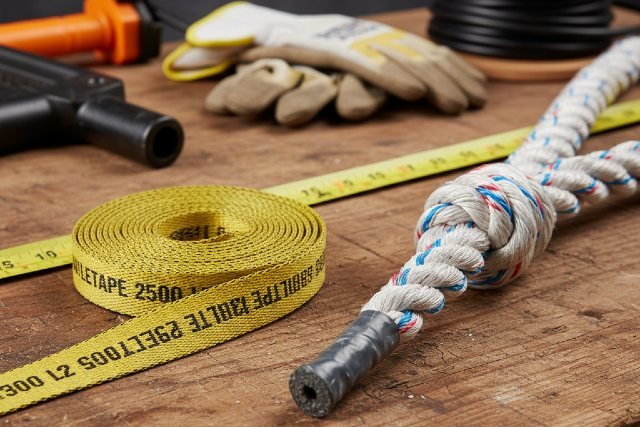
When it comes to electrical, fiber optic, and telecom installations, one question comes up often: Should you use mule tape or pull rope? Since the pulling mechanism directly affects cable integrity, reliability, and job efficiency, choosing the wrong option can cost both time and money.
In this guide, we break down the differences between mule tape and pull rope, compare their performance, and help you understand exactly which one you need for your project. If you’ve ever wondered about tensile strength, cost, applications, or durability, this in-depth guide has everything you need.
What Is Mule Tape?
Mule tape is a flat, woven polyester pulling tape designed specifically for pulling cable through conduit. It’s marked with sequential footage and engineered for high tensile strength while remaining lightweight and low-stretch.
Key Features of Mule Tape
- Flat woven polyester construction
- Printed footage markers
- Low stretch for precision pulls
- High tensile strength (ranging from 1250–6000 lbs depending on type)
- Reduced friction compared to round ropes
Common Applications
- Fiber optic cable installations
- Long conduit runs
- Telecom and data centers
- Utility and power infrastructure
- Pulling multiple conductors simultaneously
What Is Pull Rope?
Pull rope, often made of polypropylene, nylon, or polyester, is a round, braided or twisted rope used in electrical and construction applications. It’s versatile, strong, and widely available.
Key Features of Pull Rope
- Round, braided or twisted design
- Stretch varies by material (nylon stretches the most; polyester the least)
- Good for general utility pulling
- High durability and abrasion resistance
Common Applications
- Short or medium cable pulls
- Temporary utility pulling
- Overhead line work
- Winch and rigging tasks
- Outdoor construction projects
Mule Tape vs. Pull Rope: Side-by-Side Comparison
| Feature | Mule Tape | Pull Rope |
|---|---|---|
| Material | Woven polyester | Polypropylene, nylon, or polyester |
| Strength | High tensile strength | Varies by material |
| Stretch | Low stretch | Moderate to high (material-dependent) |
| Friction | Extremely low | Higher than mule tape |
| Footage Markings | Yes | Rare |
| Best For | Long conduit pulls, fiber, telecom | General pulling, short-medium runs |
| Cost | Generally lower per foot | Higher depending on type |
| Reusability | Often single-use | Highly reusable |
Advantages of Mule Tape
1. Low Friction = Easier Pulling
Because mule tape is flat, it distributes pressure more evenly and minimizes friction against conduit walls. This reduces the risk of cable jacket damage.
2. Lightweight Yet Strong
Despite its thin profile, mule tape can handle thousands of pounds of pulling force—ideal for long runs or delicate fiber installations.
3. Footage Markings for Accuracy
The printed markings help installers track distance, improving precision and reducing waste.
4. Cost Efficiency
Mule tape is often cheaper than high-quality braided rope, especially when purchased in bulk.
Advantages of Pull Rope
1. Highly Durable
Braided polyester and nylon ropes are incredibly abrasion-resistant and ideal for harsh jobsite conditions.
2. Reusable for Multiple Jobs
Pull rope can be used repeatedly, making it a long-term investment for contractors.
3. Suitable for Heavy Rigging
When extremely high loads or dynamic tension is required, certain pull ropes outperform mule tape.
4. Versatile Uses
Beyond cable pulling, ropes are used in lifting, hoisting, towing, and rigging.
When to Choose Mule Tape
You should use mule tape when:
- You’re pulling fiber optic cables
- You need low stretch and high precision
- You want reduced friction in long conduit runs
- You need accurate footage marking
- You want a cost-effective pulling solution
Ideal Scenarios
- Telecom contractors installing fiber across campuses
- Utility companies pulling long electrical feeders
- Electricians running multiple conductors in PVC conduit
When to Choose Pull Rope
You should use pull rope when:
- You need maximum durability
- You need a rope that can be reused multiple times
- You’re performing heavy rigging or outdoor utility work
- You need a strong solution for short-to-medium pulls
Ideal Scenarios
- Construction crews pulling cable on outdoor sites
- Utility workers hoisting tools or equipment
- Electricians doing short conduit runs in commercial jobs
Which Is Better for Fiber Optic Installations?
Mule tape wins — hands down.
Fiber optic cables are fragile and sensitive to tensile stress. Mule tape’s low-friction, low-stretch design minimizes risk of damage.
According to the Fiber Optic Association, excessive pulling force is one of the most common causes of fiber installation failure. Mule tape helps prevent this by offering consistent tension and smooth pulls.
Which Is Better for Long Conduit Runs?
Mule tape is generally superior.
Its flat design glides through conduit more smoothly than round rope, especially over long distances.
Which Is Better for Heavy Construction Work?
Pull rope is the better choice.
Especially braided polyester or nylon, which withstands abrasion and extreme tension.
FAQs (Optimized for Featured Snippets)
Is mule tape stronger than pull rope?
Mule tape often has equal or higher tensile strength compared to many pull ropes, but strength varies by product type.
Does mule tape stretch?
Mule tape has very low stretch, making it ideal for precise cable installations.
Can mule tape be reused?
It can be reused, but contractors typically use it once because debris and friction reduce its longevity.
Is pull rope good for fiber optic cable?
Pull rope can be used, but mule tape is recommended because it has significantly lower friction.
What’s the cheapest option?
Mule tape usually offers the best price per foot, especially in large installations.
Conclusion: Mule Tape vs. Pull Rope — Which Should You Use?
If your priority is smooth cable pulling, low friction, high strength, and long conduit runs, mule tape is the best choice. It’s optimized specifically for telecom, fiber optic, and electrical installations where precision matters.
If you need a rugged, reusable, multi-purpose pulling tool for general construction or heavy-duty work, pull rope is your go-to option.