
What Is the Male Delusion Calculator?
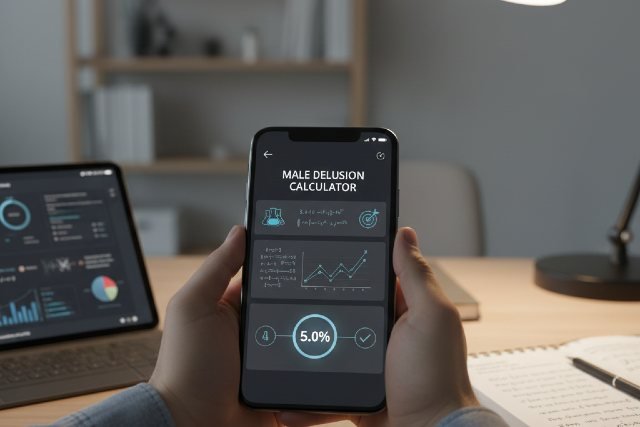
The male delusion calculator is a viral online tool designed to estimate the statistical likelihood of a man meeting his ideal partner based on specific criteria such as age, income, height, relationship status, or appearance. Although the tool is widely shared on social media for entertainment, many people use it to explore how personal expectations compare to real demographic statistics. While its tone can sometimes be humorous, the calculator’s structure is rooted in publicly available population data and probability modeling.
What the Male Delusion Calculator Actually Measures
The male delusion calculator evaluates a set of preferences and compares them to population statistics to determine how rare those expectations are. Users typically input details such as desired height, preferred age range, income expectations, and relationship readiness. The calculator cross-references these criteria with demographic information like national census data, income distribution studies, height distribution, health surveys, and relationship statistics. By analyzing how many individuals meet each requirement, the tool offers an estimated probability of finding someone who fits all selected traits.
How the Male Delusion Calculator Works
Although different versions of the calculator exist, the process is generally similar.
The first step involves users entering the preferences they expect in a potential partner. These preferences may involve height, age, income level, education, physical fitness, or geographic location. When users submit this information, the calculator retrieves demographic data from sources such as the U.S. Census Bureau, the CDC, and research groups like Pew Research Center.
Once the tool gathers the necessary data, it analyzes how many people meet each criterion individually. It then determines how many individuals meet all criteria combined, which drastically reduces the pool because each requirement narrows the results further. Finally, the calculator presents a numerical estimate, often expressed as a percentage or a ratio, indicating how likely it is for someone to meet the selected expectations.
Why the Male Delusion Calculator Became a Viral Trend
The calculator went viral because it is entertaining, surprising, and discussion-worthy. It became popular on platforms such as TikTok, YouTube, and Instagram, where creators shared their reactions to unexpectedly low probability scores. Many people appreciate the calculator’s playful way of showing how certain dating preferences, although common, may not align with real-world statistics. The tool also resonates with ongoing conversations about dating standards, attraction, modern relationship dynamics, and the impact of online culture on personal expectations.
Key Features of the Male Delusion Calculator
Despite being simplistic by design, most versions of the male delusion calculator include several notable features. Users can usually adjust multiple demographic filters to customize their results. The interface often presents its conclusions through charts, percentages, or rarity labels to make the data easy to digest. Many versions are mobile-friendly, allowing quick use on smartphones. Some calculators embrace a humorous or satirical tone, while others attempt a more data-driven, neutral approach. Regardless of the style, the goal remains to offer a quick visual representation of how expectations compare to statistical reality.
Purpose of the Male Delusion Calculator
The purpose of the male delusion calculator varies depending on how users engage with it. Some people use it purely for entertainment, treating the results as playful exaggerations. Others use it to gain a better understanding of population distributions, learning how factors like height, income, and health vary across demographics. The tool also appeals to individuals interested in self-reflection, as it can highlight whether certain personal expectations are statistically uncommon. Beyond entertainment, the calculator contributes to broader discussions about dating culture, gender expectations, and the growing influence of data-based tools in personal decision-making.
How Accurate Is the Male Delusion Calculator?
The accuracy of the male delusion calculator depends largely on where it retrieves its data and how it interprets the numbers. Some calculators reference reliable demographic sources, while others rely on more generalized or outdated statistics. As a result, the tool is usually directionally accurate but not scientifically exact. It does a reasonable job illustrating how stacked filters reduce the size of a dating pool, but it cannot account for many important factors such as personality, attraction, emotional compatibility, or regional cultural differences. It also assumes that all preferences are weighted equally, which rarely reflects real human relationships. Therefore, while the calculator can provide perspective, it should not be used as a precise measurement of one’s dating prospects.
Example Scenario: How the Calculator Generates Results
Imagine a user who prefers a potential partner between the ages of 25 and 35, earning more than $120,000 a year, standing over six feet tall, and maintaining a healthy level of physical fitness. The calculator analyzes each of these traits based on statistical information. In the United States, only a small percentage of men fall within the selected age range. An even smaller percentage earn more than $120,000. Height data from the CDC shows that only about 14 to 15 percent of men exceed six feet. A smaller portion meet all criteria at once, resulting in an extremely low final probability. The tool’s final output might show a result such as “less than one percent of men meet all selected standards,” demonstrating how quickly the dating pool shrinks as expectations increase.
Why Users Should Approach the Calculator Lightly
Although the male delusion calculator can be eye-opening, it is important not to take it too seriously. Human relationships involve emotional intelligence, personal values, compatibility, communication skills, and subjective attraction, none of which can be measured by demographic statistics alone. The calculator also doesn’t account for the fact that preferences often evolve over time. Regional differences also play a significant role, as dating in a major city offers a vastly different pool than dating in a rural area. Ultimately, the calculator is best viewed as a playful tool rather than a strict guide to relationship outcomes.
Healthy Ways to Use the Male Delusion Calculator
Many people use the calculator simply for fun, while others appreciate the insight it offers about demographic trends. It can encourage meaningful reflection, prompting users to consider whether their expectations align with statistical likelihoods. It can also be a conversation starter that helps people discuss dating norms and explore modern relationship expectations. When used in a balanced way, the calculator can foster self-awareness without creating pressure or discouragement.
Frequently Asked Questions (FAQ)
What is the male delusion calculator?
It is an online tool that estimates how likely someone is to find a partner who meets specific criteria, based on demographic statistics.
Is the male delusion calculator accurate?
It uses real data sources in many versions, but it cannot account for personal, social, or emotional factors, so it should be considered an approximate guide rather than a scientific one.
Does the male delusion calculator target men?
No. Despite its name, it is primarily a humorous or satirical tool meant to highlight general expectations rather than criticize any group.
Where does the calculator get its data?
Most versions rely on publicly available statistics such as census data, height studies, and national health surveys.
Should someone use the calculator to make dating decisions?
It is better used as entertainment or reflection rather than a definitive tool for life choices.
Conclusion: Understanding the Male Delusion Calculator
The male delusion calculator is a viral creation that blends data, humor, and social commentary to illustrate how expectations align with demographic reality. Although its results are not designed to be scientifically precise, the tool can be helpful for gaining perspective on dating preferences and population statistics. It encourages curiosity, highlights how criteria narrow dating pools, and sparks conversations about modern relationship expectations. Ultimately, the calculator works best as a fun and informative reminder that real connections depend on much more than numbers or statistics.