
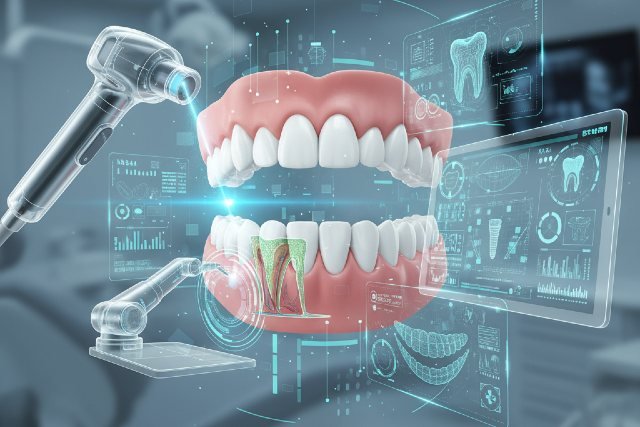
In the past decade, advancing dental care has moved far beyond simple cleanings and fillings. Modern dentistry now embraces artificial intelligence (AI), 3D imaging, laser dentistry, and digital diagnostics, making treatments faster, safer, and more personalized than ever before.
These innovations are not only transforming patient experiences but also redefining how dentists diagnose, plan, and perform complex procedures. Let’s explore how modern techniques and AI are shaping the future of oral health care worldwide.
How Modern Techniques Are Advancing Dental Care
Dentistry has entered a high-tech era. From computer-aided design (CAD/CAM) to laser-assisted surgeries, technology has revolutionized clinical precision and patient comfort.
1. Digital Impressions & 3D Imaging
- Traditional molds are being replaced with intraoral scanners that create precise 3D digital impressions.
- These digital models improve accuracy and reduce chair time.
- According to a 2024 Journal of Dental Technology study, 3D scanning reduces impression errors by up to 70% compared to traditional methods.
2. Laser Dentistry
- Lasers now treat soft and hard tissue issues with minimal pain or bleeding.
- Common applications include gum reshaping, cavity removal, and teeth whitening.
- Patients benefit from faster healing and fewer complications.
3. CAD/CAM Restorations
- CAD/CAM technology allows dentists to design and create crowns, veneers, and bridges in a single appointment.
- This eliminates the need for temporary fittings, improving efficiency and patient satisfaction.
The Role of AI in Advancing Dental Care
Artificial intelligence is no longer a futuristic concept — it’s a core tool in dental diagnostics and treatment planning. AI systems analyze data from digital scans, X-rays, and patient histories to enhance decision-making and predict outcomes.
1. AI in Diagnostics
AI-powered software can detect tooth decay, bone loss, and oral cancer with incredible accuracy. For example:
- Pearl AI and Dentrix Detect AI use deep learning to identify cavities and abnormalities invisible to the human eye.
- Studies show that AI-assisted detection improves diagnostic accuracy by 15–25%.
2. Predictive Analytics for Treatment Planning
AI can evaluate patient data to predict risks such as gum disease progression or implant failure.
- This proactive approach allows for early intervention and better long-term results.
- Dentists can create personalized treatment plans based on data-driven insights.
3. Enhancing Patient Experience
- Virtual assistants and chatbots simplify appointment scheduling, follow-ups, and post-care instructions.
- AI-powered communication tools help patients understand procedures and costs, increasing transparency and trust.
Combining AI and Modern Techniques: A Winning Formula
When combined, AI and modern dental technologies lead to precision-driven care. Here’s how the integration looks in practice:
| Technology | Function | AI Integration | Benefits |
|---|---|---|---|
| 3D Imaging | Creates detailed models of oral structures | AI refines imaging and identifies abnormalities | Improves diagnosis accuracy |
| Laser Dentistry | Minimally invasive tissue treatment | AI suggests optimal laser intensity and patterns | Enhances precision and safety |
| CAD/CAM | Designs restorations digitally | AI optimizes design for bite alignment and aesthetics | Reduces errors and chair time |
| Digital Records | Stores patient data securely | AI analyzes trends for preventive care | Enables predictive dentistry |
Benefits of Advancing Dental Care Through AI and Modern Technology
1. Greater Precision
AI and advanced imaging technologies eliminate guesswork, ensuring accurate diagnoses and high-quality restorations.
2. Reduced Pain and Anxiety
Laser dentistry and digital workflows make procedures minimally invasive, reducing the need for anesthesia and recovery time.
3. Faster Turnaround
CAD/CAM restorations and digital impressions shorten visits from weeks to hours.
4. Enhanced Preventive Care
AI continuously analyzes patient data to flag early signs of disease, allowing preventive treatment before major problems arise.
5. Improved Accessibility
Teledentistry and AI-driven remote consultations make dental expertise available to underserved communities.
Common Questions About Advancing Dental Care
Q1: How safe are AI-driven dental procedures?
AI doesn’t replace human expertise — it enhances it. All AI-assisted tools are regulated and used under dentist supervision, ensuring patient safety and accuracy.
Q2: Does AI increase dental costs?
Initially, yes — technology adoption requires investment. However, over time, AI reduces diagnostic errors and treatment costs through early detection and efficiency.
Q3: Can AI replace dentists?
No. AI supports dentists with data insights but cannot replicate human judgment, empathy, and manual skill.
Future Trends in Advancing Dental Care
The next decade promises even more innovation:
- Augmented Reality (AR) for virtual treatment simulations.
- Smart dental wearables for monitoring oral hygiene.
- Nanotechnology for regenerative tooth repair.
- AI-driven robotics for surgical precision.
As these technologies mature, dentistry will become more predictive, personalized, and pain-free than ever before.
Conclusion: The New Standard for Dental Excellence
The journey toward advancing dental care through modern techniques and AI represents a monumental shift in oral health. By blending precision technology with intelligent systems, dental professionals can deliver safer, faster, and more patient-centered care.
The future of dentistry is digital — and it’s already here. Whether through AI-powered diagnostics or 3D-printed restorations, these innovations ensure healthier smiles and a brighter future for dental medicine.