
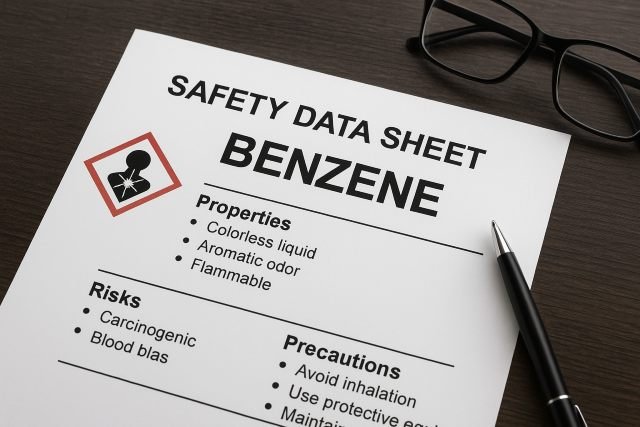
What Is a Benzene Safety Data Sheet (SDS)?
A benzene safety data sheet (SDS) is a detailed document that provides essential safety information for anyone who handles, stores, or transports benzene. It includes critical data on chemical properties, hazards, exposure controls, and emergency procedures designed to protect human health and the environment.
Benzene is a highly flammable and toxic aromatic hydrocarbon (C₆H₆) widely used in chemical manufacturing. Due to its carcinogenic nature, strict adherence to SDS guidelines is mandatory in laboratories and industrial settings.
Overview of Benzene and Its Chemical Properties
| Property | Details |
|---|---|
| Chemical Name | Benzene |
| Molecular Formula | C₆H₆ |
| CAS Number | 71-43-2 |
| Appearance | Colorless, highly flammable liquid |
| Odor | Sweet, aromatic |
| Boiling Point | 80.1°C (176°F) |
| Melting Point | 5.5°C (41.9°F) |
| Flash Point | -11°C (12°F) |
| Vapor Density | 2.8 (air = 1) |
| Solubility | Slightly soluble in water; miscible with organic solvents |
The benzene safety data sheet (SDS) emphasizes that the chemical’s volatility and flammability make it a significant fire and inhalation hazard. Workers must always use proper ventilation and flame-resistant equipment.
Health Hazards and Exposure Risks
Acute Health Effects
- Inhalation may cause dizziness, drowsiness, headaches, and confusion.
- High concentrations can lead to loss of consciousness or respiratory failure.
- Skin contact causes irritation, redness, and potential absorption through the skin.
Chronic Health Effects
Long-term exposure to benzene is associated with severe health consequences:
- Bone marrow suppression
- Leukemia and other blood disorders
- Reproductive toxicity
- Immune system damage
According to the OSHA Benzene Standard (29 CFR 1910.1028), benzene is a known human carcinogen, and exposure must be minimized through engineering controls and protective measures.
Safe Handling and Storage
Proper handling and storage are critical elements outlined in the benzene safety data sheet (SDS).
Handling Precautions
- Always handle benzene in a fume hood or well-ventilated area.
- Avoid sparks, open flames, and static discharge sources.
- Use explosion-proof equipment and grounded containers.
Storage Guidelines
- Store in tightly sealed containers made of compatible materials (e.g., stainless steel).
- Keep away from oxidizers, heat, and direct sunlight.
- Maintain storage temperatures below room temperature to reduce vapor formation.
Personal Protective Equipment (PPE)
Required PPE
| Protection Type | Recommended Equipment |
|---|---|
| Eye/Face | Chemical splash goggles and face shield |
| Skin/Hands | Nitrile or neoprene gloves |
| Body | Flame-resistant lab coat or coveralls |
| Respiratory | NIOSH-approved respirator (organic vapor cartridge) when ventilation is insufficient |
Tip: Regularly inspect and replace PPE as recommended in the benzene SDS to ensure full protection.
First Aid Measures
| Exposure Route | First Aid Action |
|---|---|
| Inhalation | Move victim to fresh air immediately. If not breathing, provide artificial respiration. Seek medical help. |
| Skin Contact | Wash affected area with soap and water for at least 15 minutes. Remove contaminated clothing. |
| Eye Contact | Rinse with water for at least 15 minutes. Seek medical attention. |
| Ingestion | Do NOT induce vomiting. Call poison control or a physician immediately. |
Prompt action is vital. Always refer to the benzene safety data sheet (SDS) for site-specific emergency procedures.
Firefighting and Spill Response
Firefighting
- Use foam, dry chemical, or carbon dioxide (CO₂) extinguishers.
- Water spray may be used to cool containers but not to extinguish benzene fires directly.
- Firefighters should wear self-contained breathing apparatus (SCBA).
Spill Cleanup
- Evacuate the area and eliminate ignition sources.
- Absorb spilled material using inert absorbent (sand or vermiculite).
- Dispose of waste per EPA hazardous waste regulations (RCRA code U019).
Regulatory and Environmental Information
- EPA Classification: Hazardous Air Pollutant (HAP)
- OSHA PEL: 1 ppm (8-hour TWA)
- NIOSH REL: 0.1 ppm (8-hour TWA)
- IARC Classification: Group 1 – Carcinogenic to humans
Benzene can contaminate soil and groundwater, posing long-term environmental risks. Regular air monitoring and leak detection systems are crucial for industrial facilities.
Practical Safety Tips for Benzene Users
- Conduct regular safety audits and SDS training sessions.
- Implement closed-system transfers to limit exposure.
- Maintain spill kits and eyewash stations near work areas.
- Label containers clearly with hazard warnings and pictograms.
Example: A chemical plant reduced workplace exposure incidents by 40% after upgrading ventilation systems and training staff on the updated benzene SDS.
Frequently Asked Questions (FAQ)
1. What is the main purpose of a benzene safety data sheet (SDS)?
To provide essential information on safe handling, potential hazards, and emergency procedures for benzene use.
2. How should benzene waste be disposed of?
Dispose of all benzene-contaminated materials as hazardous waste according to local, state, and federal regulations.
3. Is benzene still used today?
Yes, benzene is used in producing plastics, resins, synthetic fibers, and rubber, though strict exposure controls are required.
4. Can benzene exposure be detected?
Yes, through biological monitoring (blood and urine tests for benzene metabolites) and air sampling in workplaces.
Conclusion
Understanding and following the benzene safety data sheet (SDS) is vital for protecting health, ensuring compliance, and preventing chemical accidents. By using proper PPE, maintaining safe storage conditions, and staying informed through SDS training, workers and employers can effectively manage benzene-related risks.