
What Is a Cricket Bite?
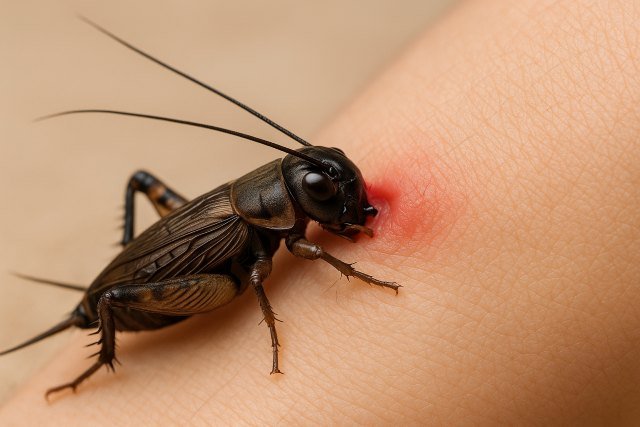
A cricket bite is a rare but possible occurrence when a cricket uses its mandibles (mouthparts) to nip the skin. While crickets aren’t venomous or aggressive, they may bite humans if handled roughly or feel threatened. Most bites are harmless, causing only mild redness or irritation. However, poor hygiene or secondary infection can lead to complications.
What Does a Cricket Bite Look Like?
A cricket bite mark usually appears as:
- A small red dot or raised bump
- Localized itching or mild burning
- Occasional swelling or tenderness
In rare cases, sensitive individuals may experience mild allergic reactions. These can include hives, prolonged itching, or a rash near the bite site.
| Severity | Common Symptoms | When to See a Doctor |
|---|---|---|
| Mild | Small red bump, itching | Not usually needed |
| Moderate | Swelling, discomfort | If symptoms persist >48 hrs |
| Severe | Infection, pus, fever | Seek medical care immediately |
Why Do Crickets Bite Humans?
Crickets are primarily herbivores that feed on plants, decaying matter, and other insects. They do not seek human blood like mosquitoes or bed bugs. However, they might bite accidentally in these situations:
- When trapped inside clothing or bedding
- If handled or squeezed
- During infestations when food is scarce
Cricket bites are more likely from larger species, such as the field cricket or camel cricket, which have stronger mandibles.
Common Symptoms of a Cricket Bite
Most cricket bite symptoms are mild and short-lived. Here’s what you might experience:
- Red, itchy bump on the skin
- Mild pain or stinging sensation
- Slight swelling or inflammation
- Dry or flaky skin at the site
If the bite becomes infected, symptoms can worsen:
- Pus or yellow discharge
- Increasing redness or warmth
- Fever or fatigue
Medical Tip: Always wash the bite area immediately to reduce the risk of infection.
How to Treat a Cricket Bite (Step-by-Step)
Treating a cricket bite is simple and can usually be done at home using basic first aid.
1. Clean the Bite Area
- Wash the area gently with soap and warm water.
- Pat dry with a clean towel.
2. Apply an Antiseptic
- Use an antiseptic cream or hydrocortisone ointment to reduce itching.
- Aloe vera gel or diluted tea tree oil can also soothe irritation naturally.
3. Use a Cold Compress
- Apply an ice pack (wrapped in a cloth) for 10–15 minutes.
- This helps minimize swelling and discomfort.
4. Avoid Scratching
- Scratching can worsen inflammation or introduce bacteria.
- Consider using an anti-itch lotion like calamine.
5. Monitor for Infection
- If redness or pain worsens after 48 hours, consult a healthcare professional.
- Antibiotics may be prescribed if the area becomes infected.
Preventing Cricket Bites: Practical Tips
While crickets rarely bite, preventing contact altogether is best.
Home Prevention Tips
- Seal cracks and entry points around windows and doors.
- Use screens on vents and openings.
- Keep outdoor lights dim (crickets are attracted to light).
- Store food and pet feed in sealed containers.
- Regularly vacuum and clean damp areas like basements or bathrooms.
Personal Protection
- Avoid handling wild crickets.
- Wear gloves if cleaning infested areas.
- Shake out bedding, clothing, or towels if stored in dark spaces.
Are Cricket Bites Dangerous?
Generally, cricket bites are not dangerous. However, the real concern lies in possible secondary infections or allergic reactions.
Crickets can also carry parasites like nematodes or bacteria that may contaminate surfaces, though this is extremely uncommon in household encounters.
Did You Know?
Some cricket species can produce painful bites if provoked, but they do not transmit diseases to humans — unlike ticks or mosquitoes.
Frequently Asked Questions (FAQs)
1. Do crickets bite humans at night?
Yes, but very rarely. Crickets are nocturnal and might bite if they crawl onto your skin while you’re asleep and feel trapped.
2. Are cricket bites poisonous?
No, cricket bites are non-poisonous. They can cause irritation, but not venom-related reactions.
3. How long does a cricket bite take to heal?
Usually, 1–3 days with proper care. If infected, healing may take up to a week.
4. Can crickets spread diseases?
Not directly. However, their droppings or decomposing bodies may attract bacteria or fungi in humid environments.
5. How do I know it’s a cricket bite and not a bed bug bite?
Cricket bites are isolated and random, while bed bug bites often appear in a cluster or line.
Natural Remedies for Cricket Bites
If you prefer home remedies, try these:
- Aloe vera gel: Soothes and reduces inflammation.
- Honey: Has antibacterial properties.
- Cold cucumber slices: Calm irritation naturally.
- Oatmeal paste: Reduces itching and redness.
These remedies can complement, but not replace, medical care if symptoms persist.
Expert Insight: When to See a Doctor
See a doctor if:
- The bite area becomes increasingly red, warm, or swollen.
- You develop fever, fatigue, or chills.
- The wound leaks pus or forms a crust.
Doctors may prescribe:
- Topical antibiotics
- Oral antihistamines
- Anti-inflammatory medication
Conclusion: Staying Safe from a Cricket Bite
A cricket bite is more of a nuisance than a danger. With proper hygiene, quick first aid, and preventive home maintenance, you can easily avoid any complications. Remember: most bites heal within a few days and rarely cause serious harm.
If symptoms worsen, seek medical advice promptly to ensure full recovery.