
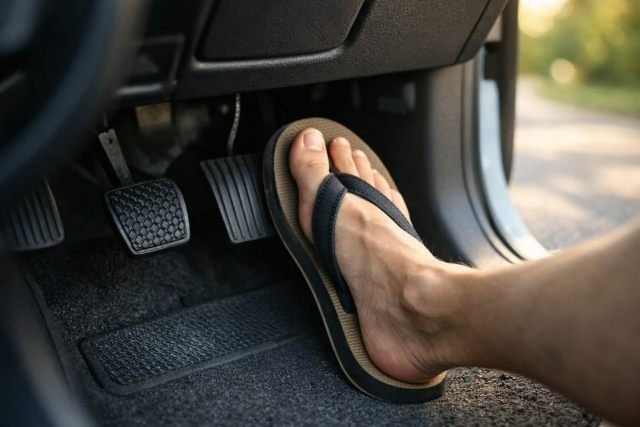
During hot weather, flip flops feel like the most convenient footwear choice. Many drivers slide behind the wheel wearing them without hesitation. This raises a common and important question: is it illegal to drive in flip flops, or is it simply considered unsafe? The truth lies somewhere in between. While most places do not have a specific law banning flip flops, wearing them can still lead to fines, legal trouble, or insurance issues if they interfere with safe driving.
This detailed guide explores the legal status, safety risks, real-world consequences, and expert recommendations so you can decide whether driving in flip flops is worth the risk.
What the Law Really Means When It Comes to Footwear
To understand whether it is illegal to drive in flip flops, it helps to understand how traffic laws are written. In many countries, driving laws do not list every prohibited action. Instead, they rely on general rules that require drivers to maintain full control of their vehicle at all times.
Because of this, flip flops are rarely mentioned by name in legislation. However, if your footwear prevents proper control of the pedals, law enforcement officers can still issue citations under careless or reckless driving laws. This means legality often depends on circumstances rather than footwear alone.
Is It Illegal to Drive in Flip Flops in the United States?
In the United States, there is no federal or state law that directly states it is illegal to drive in flip flops. From a purely legal standpoint, wearing flip flops while driving is allowed. However, that does not guarantee protection from penalties.
If an officer determines that your flip flops contributed to unsafe driving behavior, you can still receive a citation. For example, if a flip flop slips off and causes delayed braking or sudden swerving, it may be considered a failure to maintain control of the vehicle. In accident investigations, footwear can even be documented as a contributing factor.
According to the National Highway Traffic Safety Administration, pedal misapplication and delayed braking play a role in thousands of accidents every year. While flip flops are not always the cause, loose footwear increases the likelihood of such mistakes.
Legal Status of Driving in Flip Flops Around the World
Outside the United States, the legal approach is similar but enforcement can be stricter. In the United Kingdom, driving in flip flops is not explicitly illegal, but the Highway Code states that drivers must wear footwear that allows proper control of the vehicle. If flip flops are deemed unsafe during a traffic stop or after an accident, drivers may face fines and penalty points.
Across much of Europe, including countries such as France, Spain, Germany, and Italy, flip flops are generally legal. However, drivers can still be fined if authorities believe their footwear compromised safety. In some cases, insurance companies in these countries may also reduce or deny claims if flip flops are shown to have contributed to an accident.
In Australia, driving in flip flops, often called thongs, is legal. Still, careless driving laws apply, and penalties may follow if footwear interferes with vehicle control.
Why Driving in Flip Flops Is Considered Unsafe
Even where it is legal, safety experts consistently warn against driving in flip flops. The design of flip flops makes them unstable on pedals, especially during sudden braking or emergency maneuvers. The thin soles provide minimal grip, and the loose back allows the foot to slip out unexpectedly.
Research conducted by IAM RoadSmart in the UK found that inappropriate footwear, including flip flops, can increase stopping distances significantly at higher speeds. Even a few extra meters can mean the difference between a close call and a serious collision.
Another concern is distraction. If a flip flop comes loose or gets stuck under a pedal, the driver’s attention shifts away from the road at a critical moment. These split-second distractions are often enough to cause accidents.
Insurance Implications You Should Not Ignore
One of the most overlooked aspects of driving in flip flops is insurance liability. Even if it is not illegal to drive in flip flops, insurance companies assess driver behavior after an accident. If investigators determine that unsafe footwear contributed to the crash, your claim may be reduced or rejected.
In serious accidents, opposing insurers may argue negligence based on footwear choice. This can lead to higher premiums, partial payouts, or complete denial of coverage. From an insurance perspective, legality matters less than whether reasonable care was exercised.
Are Flip Flops Worse Than Driving Barefoot?
Surprisingly, many driving safety experts agree that barefoot driving is often safer than driving in flip flops. Bare feet provide direct contact with the pedals and eliminate the risk of footwear slipping off or getting stuck. However, barefoot driving is still not ideal, particularly for long journeys, as it can cause fatigue and reduced pedal pressure over time.
The safest option remains wearing secure, well-fitted shoes designed for stability and grip.
What Happens If You Crash While Wearing Flip Flops?
If you are involved in an accident while wearing flip flops, the outcome depends on the investigation. Police reports may include notes about footwear if it appears relevant. Insurance adjusters may review these details closely.
If flip flops are found to have delayed braking, caused pedal obstruction, or reduced control, you may be held partially or fully responsible for the incident. This can result in fines, increased insurance premiums, or legal liability, even though it was not illegal to drive in flip flops.
Common Questions Drivers Ask
Many drivers ask whether it is illegal to drive in flip flops, and the general answer is no in most regions. However, legality does not equal safety. Another frequent question is whether flip flops can cause someone to fail a driving test. In many countries, examiners may refuse to conduct the test or fail a candidate if footwear is considered unsafe.
Drivers also wonder if wearing flip flops can lead to reckless driving charges. This is possible if authorities believe footwear directly contributed to dangerous driving behavior.
Expert Advice for Safe Summer Driving
Road safety experts consistently recommend choosing footwear that allows full control of the pedals. Closed-toe shoes with firm soles and good grip are ideal. If you plan to wear flip flops at your destination, keeping a spare pair of driving shoes in your car is a simple and effective solution.
The AAA Foundation for Traffic Safety emphasizes that anything interfering with proper pedal operation increases crash risk. Footwear choice may seem minor, but it plays a significant role in driving safety.
Conclusion: Is It Illegal to Drive in Flip Flops or Just Unsafe?
So, is it illegal to drive in flip flops? In most cases, the answer is no. However, legality should not be confused with safety. Flip flops increase the risk of slipping, delayed braking, and loss of control. They can also lead to fines, insurance complications, and liability after an accident.
While you may not be breaking the law, you are taking an unnecessary risk. For your safety and legal protection, wearing secure footwear while driving is always the smarter choice. Comfort can wait, but control on the road cannot.