
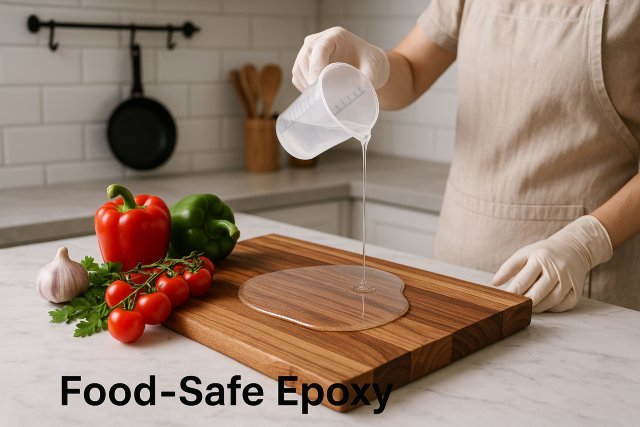
What Is Food Safe Epoxy?
Food safe epoxy is a specially formulated resin that, once cured, creates a durable, non-toxic, and waterproof surface suitable for contact with food. It’s commonly used to coat kitchen countertops, cutting boards, serving trays, dining tables, and bar tops.
Unlike regular epoxy, food safe epoxy meets FDA or similar food contact safety standards, ensuring that cured surfaces won’t leach harmful chemicals into your food.
Why Choose Food Safe Epoxy for Kitchen Projects
Epoxy resin has gained massive popularity in modern kitchens — not just for its glossy finish but also for its strength, resistance, and customizability. Here’s why it’s an excellent choice for culinary environments:
- Durability: Resistant to heat, water, and scratches.
- Aesthetic Appeal: Provides a smooth, glass-like finish that enhances wood, metal, or stone.
- Ease of Cleaning: Non-porous surface prevents bacteria buildup.
- Longevity: Properly applied, food safe epoxy can last for years without yellowing.
Pro Tip: Always check the manufacturer’s specifications to ensure the epoxy is labeled food contact safe once fully cured.
Key Features of High-Quality Food Safe Epoxy
When shopping for epoxy for your kitchen or dining area, consider these essential characteristics:
| Feature | Why It Matters |
|---|---|
| FDA Compliance | Ensures the cured surface is safe for incidental food contact. |
| Low VOC Formula | Reduces harmful fumes during application. |
| UV Resistance | Prevents yellowing over time, ideal for sunlit kitchens. |
| Heat Resistance | Protects against damage from hot pots or pans. |
| Self-Leveling Properties | Creates a flawless, professional-grade finish. |
Best Uses for Food Safe Epoxy in Kitchens
Food safe epoxy isn’t just for countertops — its versatility extends across multiple kitchen and dining applications:
1. Countertops & Bar Tops
Epoxy can rejuvenate old kitchen counters or add a high-gloss finish to concrete, wood, or granite surfaces.
2. Dining Tables
A clear or colored epoxy coat can turn rustic wooden tables into stunning showpieces.
3. Cutting Boards
Use FDA-approved epoxy to fill cracks or embed decorative elements like dried flowers or wood inlays.
4. Serving Trays
Perfect for DIY enthusiasts looking to craft durable, waterproof trays with custom designs.
How to Apply Food Safe Epoxy: Step-by-Step
Step 1: Prepare the Surface
Clean thoroughly and sand if necessary. Ensure the surface is free of dust, grease, or moisture.
Step 2: Mix the Resin and Hardener
Follow the manufacturer’s ratio precisely (usually 1:1 or 2:1). Mix slowly to avoid bubbles.
Step 3: Pour and Spread
Pour the epoxy evenly and use a spreader or brush to distribute it.
Step 4: Remove Air Bubbles
Use a heat gun or torch to eliminate surface bubbles for a smooth finish.
Step 5: Let It Cure
Allow 24–72 hours for the epoxy to fully harden before food contact.
Note: Only once the epoxy is fully cured is it truly food safe. Partial curing may leave traces of uncured chemicals.
Top-Rated Food Safe Epoxy Brands (2025 Edition)
Here are some trusted options based on customer reviews and safety certifications:
- EcoPoxy FlowCast – Plant-based, low odor, and FDA-compliant.
- Stone Coat Countertops Art Coat – High-gloss, UV-resistant, and food safe.
- TotalBoat TableTop Epoxy – Self-leveling and easy to apply.
- MAS Table Top Pro Epoxy – Popular among DIYers for its clarity and safety.
(Always verify each brand’s latest safety data sheet before purchase.)
Common Questions About Food Safe Epoxy
Is all epoxy food safe?
No. Only epoxy resins specifically certified as food safe after full curing should be used in kitchen or dining projects.
Can I place hot pans on epoxy countertops?
While most food safe epoxy can handle mild heat, avoid direct contact with very hot items. Use trivets to prevent damage.
Does food safe epoxy yellow over time?
UV-resistant formulations help prevent yellowing, especially in well-lit kitchens.
How long does food safe epoxy last?
With proper care, epoxy-coated surfaces can last 5–10 years or more without significant wear.
Safety & Maintenance Tips
- Always wear gloves and a respirator during mixing and pouring.
- Clean surfaces with mild soap — avoid harsh chemicals.
- Recoat every few years to maintain gloss and protection.
- Store unused epoxy in a cool, dry place.
Alternatives to Food Safe Epoxy
If epoxy isn’t your preferred option, consider:
- Beeswax and mineral oil finishes (for cutting boards).
- Food-grade polyurethane coatings.
- Shellac-based finishes (for decorative surfaces).
Each alternative has pros and cons regarding durability, maintenance, and safety.
Conclusion: Elevate Your Kitchen with Food Safe Epoxy
Investing in food safe epoxy is a smart, stylish, and safe way to protect and beautify your kitchen and dining surfaces. Its combination of durability, safety, and visual appeal makes it ideal for modern homes and DIY creators alike.
Whether you’re sealing a countertop, crafting a resin table, or repairing a cutting board, choosing the right food safe epoxy ensures both peace of mind and long-lasting results.