
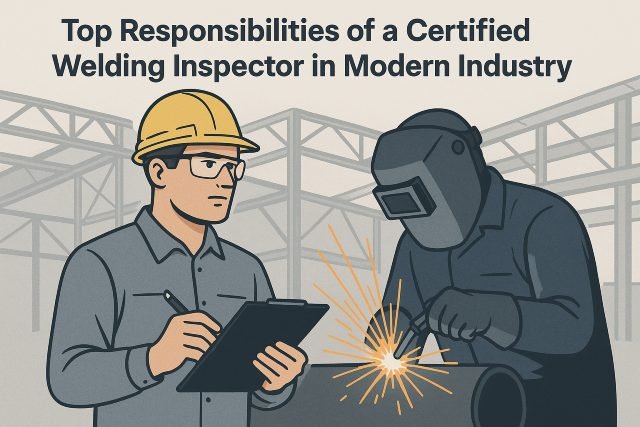
A certified welding inspector plays a critical role in ensuring that welding operations meet the highest standards of safety, quality, and structural reliability. It’s essential to recognize that modern industry — from construction and manufacturing to oil and gas — relies heavily on welding integrity. Any flaw in a weld can compromise entire structures, making the certified welding inspector indispensable. Their responsibilities blend technical expertise, regulatory knowledge, and on-site oversight, making them one of the most influential professionals in industrial operations today. As industries evolve with advanced materials and automation, the responsibilities of a certified welding inspector continue to expand and adapt.
Why the Role of a Certified Welding Inspector Matters Today
In modern industrial environments, safety regulations and quality expectations are more rigorous than ever. A certified welding inspector ensures that welded components meet engineering specifications, industry codes, and regulatory standards. Their involvement reduces the likelihood of structural failures, shutdowns, and costly repairs. According to the American Welding Society (AWS), more than 50% of manufactured products rely on welding, which demonstrates how critical proper inspection has become in global production.
As industries adopt new welding technologies, such as robotics, laser welding, and digital monitoring systems, inspectors are required to stay informed about evolving techniques. They must also understand metallurgy, nondestructive testing principles, and environmental factors affecting weld quality. The inspector’s role safeguards companies from legal issues while helping maintain structural integrity across projects.
Core Responsibilities of a Certified Welding Inspector
One of the top responsibilities of a certified welding inspector involves reviewing technical documents before welding begins. They examine blueprints, specifications, and welding procedure specifications (WPS) to confirm accuracy and compliance. Their review ensures that welders follow approved procedures and that the project meets mandatory standards.
Another important responsibility is monitoring welding conditions throughout operations. Inspectors assess pre-weld preparation, joint configuration, equipment settings, and environmental conditions. Their attention to detail ensures welded materials are clean, properly aligned, and fit for the intended load-bearing requirements.
Inspectors also observe welding techniques to ensure that welders maintain consistent quality. This includes verifying electrode selection, filler material compatibility, and heat control. Because improper heat input can lead to warping or cracking, inspectors safeguard the structural reliability of welded parts through continuous oversight.
Quality Control and Assurance in Welding Operations
Quality assurance is one of the defining responsibilities of a certified welding inspector. Inspectors must identify visible and internal weld defects, including porosity, undercutting, incomplete fusion, and cracking. They utilize visual inspection techniques and various testing methods to evaluate structural soundness.
Modern industries frequently rely on nondestructive testing (NDT) methods such as radiography, ultrasonic testing, magnetic particle testing, and dye penetrant inspections. These techniques allow inspectors to detect hidden defects without damaging the materials. Many certified welding inspectors receive specialized training to interpret NDT results, enhancing their value within industrial teams.
Quality control does not end with inspection. Inspectors maintain detailed records of each weld, including acceptance criteria, test results, and corrective actions. These records support compliance during audits and demonstrate adherence to safety standards such as ASME, AWS, and ISO guidelines.
Safety Monitoring and Regulatory Compliance
Safety oversight is essential in environments where heat, sparks, pressure, and heavy machinery are involved. The certified welding inspector ensures that welders follow Occupational Safety and Health Administration (OSHA) guidelines, wear appropriate protective equipment, and use safe working practices. Their knowledge of regulatory requirements minimizes accidents and ensures safe handling of equipment and materials.
Inspectors are responsible for verifying that welding consumables, gases, and materials are stored correctly. Incorrect storage can compromise material quality, creating hazards or substandard welds. They also monitor ventilation and environmental conditions, ensuring compliance with air quality and fire prevention standards.
Regulatory compliance extends to national and international codes. For example, industries such as pipeline construction require adherence to API standards, while structural projects follow AWS D1.1 codes. A certified welding inspector must be proficient in these standards and be able to apply them during everyday operations.
Documentation and Reporting Responsibilities
In modern industry, strong documentation practices are essential. A certified welding inspector maintains detailed inspection reports, welder qualification records, procedure qualification records, and material certifications. These documents serve as proof of compliance during audits and project handovers.
Accurate documentation also protects companies from liability. Should a weld failure occur, inspection records become crucial evidence for determining cause and responsibility. High-quality reporting reflects professionalism and supports traceability throughout the project lifecycle.
Inspectors frequently collaborate with engineers, project managers, and quality assurance teams to ensure that documentation aligns with project requirements. Their reports help maintain workflow clarity and support decision-making on-site.
Communication and Collaboration Across Project Teams
A modern certified welding inspector must effectively communicate inspection results, areas needing improvement, and corrective actions. Strong communication allows inspectors to build trust among welders, supervisors, and managers. They often serve as a bridge between technical requirements and practical application.
Inspectors collaborate with various departments, including engineering, safety, operations, and management. This collaboration ensures that welding practices align with project goals and quality standards. They provide guidance when issues arise and help teams make informed decisions that protect structural integrity.
Because welding impacts multiple stages of production, inspectors often participate in planning meetings. Their involvement helps anticipate challenges and ensures smooth coordination between fabrication, assembly, and installation teams.
Training and Mentoring Future Welders
A large part of the certified welding inspector’s contribution to industry involves educating others. Experienced inspectors train new welders in best practices, safety standards, and quality expectations. This mentorship supports workforce development and reduces errors on job sites.
Inspectors often help conduct welder qualification tests, ensuring that employees meet skill requirements for specific processes. Their feedback helps welders improve and adapt to new technologies or materials. As industries face shortages of skilled labor, the inspector’s role in training remains vital to maintaining standards.
Mentorship also builds a safety-oriented culture. When welders understand why certain procedures matter, they become more committed to quality outcomes. The inspector’s leadership contributes to long-term workforce improvement.
Adapting to Technological Advancements in Welding
Modern welding environments are evolving rapidly. Automation, robotics, advanced sensors, and digital monitoring systems are becoming more common. A certified welding inspector must adapt to these changes by learning how to evaluate robotic welds and interpret digital data.
Automated systems can reduce human error, but they still require oversight. Inspectors verify that machines follow proper settings and produce welds that meet specifications. They also ensure that software logs and digital inspection records maintain accuracy.
Materials science advancements also impact inspection responsibilities. New alloys, composites, and welding processes require updated knowledge of thermal behavior, compatibility, and weldability. Inspectors who remain current with technology bring immense value to modern industrial operations.
Industry Examples Highlighting Inspector Responsibilities
In the construction industry, inspectors ensure welds on beams, columns, and trusses meet load-bearing standards. Their inspections prevent catastrophic failures in buildings and bridges, safeguarding public safety.
In the oil and gas sector, weld integrity is crucial for pipelines and pressure vessels. Inspectors monitor welds that must withstand extreme conditions, including high pressure, corrosive environments, and fluctuating temperatures.
Manufacturing environments rely on welding inspectors to maintain production quality for cars, machinery, and equipment. Even minor defects can lead to product recalls or safety hazards if not caught early.
These examples illustrate that the certified welding inspector plays a foundational role across multiple industries, ensuring both safety and economic efficiency.
FAQs About Certified Welding Inspectors
What qualifications do you need to become a certified welding inspector?
Most inspectors earn certification through the American Welding Society (AWS). Requirements typically include experience in welding or engineering, educational credits, and passing the AWS CWI exam.
Do certified welding inspectors only perform visual inspections?
No. While visual inspection is the foundation, inspectors often interpret results from nondestructive testing methods such as ultrasonic or radiographic testing.
Are certified welding inspectors in demand?
Yes. According to AWS workforce data, demand continues to rise due to retirement trends, infrastructure expansion, and increased manufacturing needs.
How much do certified welding inspectors earn?
Salaries vary but typically range from $55,000 to over $100,000 annually, depending on industry and experience.
Conclusion
A certified welding inspector holds significant responsibility in maintaining safety, quality, and regulatory compliance across modern industry. Their expertise guides welding operations from planning to final inspection, ensuring every weld meets required standards. As industries expand and incorporate advanced technologies, inspectors continue to serve as vital guardians of structural integrity. Their commitment to precision and safety helps companies avoid costly errors while building reliable structures that support communities and industries worldwide. For anyone interested in a career rooted in technical skill, leadership, and long-term growth, becoming a certified welding inspector offers a meaningful and impactful path.