
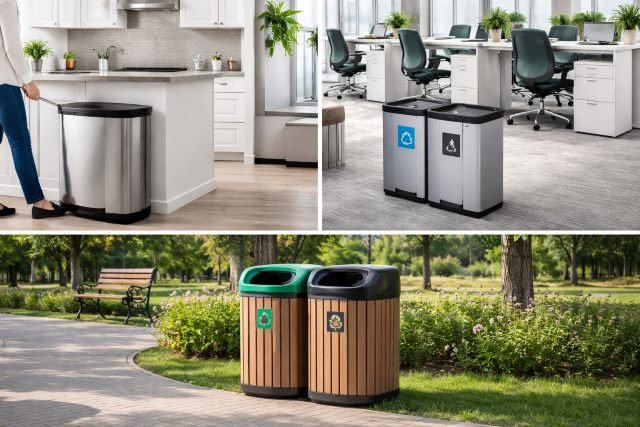
A well-designed trash receptacle is one of the most overlooked yet essential components of modern living. From residential kitchens to corporate offices and busy public spaces, trash receptacles support hygiene, organization, and sustainability. Choosing the right trash receptacle solution improves cleanliness, reduces odors, and encourages responsible waste disposal across all environments.
This comprehensive guide explores trash receptacle solutions for homes, offices, and public areas, helping you understand types, materials, placement strategies, and eco-friendly options while providing real-world insights backed by authoritative sources.
What Is a Trash Receptacle?
A trash receptacle is a container specifically designed to collect and store waste materials before disposal. It is used in residential, commercial, and public settings to manage everyday waste efficiently. Trash receptacles are engineered to minimize odor, prevent spillage, and improve sanitation while supporting proper waste segregation.
Depending on usage, a trash receptacle may be small and decorative for indoor use or large, reinforced, and weather-resistant for outdoor public spaces.
Why the Right Trash Receptacle Matters
The importance of a properly selected trash receptacle goes beyond appearance. Waste containers directly influence public health, cleanliness, and environmental outcomes. Inadequate or poorly placed trash receptacles often result in litter, pest attraction, and inefficient waste handling.
According to the U.S. Environmental Protection Agency, effective waste separation and accessible trash receptacles significantly increase recycling rates and reduce landfill dependency. Properly labeled and strategically placed trash receptacles can divert up to 35 percent of waste away from landfills.
Trash Receptacle Solutions for Homes
Home trash receptacles are designed to balance functionality, capacity, and aesthetics. Different rooms generate different types and volumes of waste, making it essential to select receptacles that match specific household needs.
Kitchen Trash Receptacles
The kitchen is the primary source of household waste, including food scraps and packaging. A kitchen trash receptacle should have sufficient capacity, odor control features, and easy access. Step-operated lids reduce contact and improve hygiene, while sealed designs help contain smells. For most households, a trash receptacle with a capacity between 10 and 13 gallons provides an ideal balance between convenience and frequency of disposal.
Bathroom Trash Receptacles
Bathroom trash receptacles are smaller and designed for light waste such as tissues and hygiene products. Compact designs fit discreetly into tight spaces while remaining easy to clean. Moisture-resistant materials are particularly important in bathroom environments.
Living Room and Bedroom Trash Receptacles
Trash receptacles used in living areas often prioritize visual appeal. Decorative finishes, slim profiles, and quiet lids make them suitable for shared spaces. These trash receptacles typically handle dry waste such as paper and packaging.
Trash Receptacle Solutions for Offices
An office trash receptacle must support productivity, cleanliness, and sustainability. Poor waste management in offices leads to clutter, unpleasant odors, and missed recycling opportunities.
Office Desk Trash Receptacles
Small trash receptacles placed near desks are primarily used for paper waste and packaging. While convenient, many organizations are transitioning away from individual desk bins to encourage centralized waste disposal and better recycling habits.
Centralized Office Trash Receptacles
Centralized trash receptacles reduce clutter and improve waste segregation accuracy. When combined with recycling and compost bins, they support corporate sustainability goals. Research by Waste Management Inc. shows that offices with visible, well-labeled recycling trash receptacles experience a 50 percent increase in proper recycling behavior.
Trash Receptacles for Public Areas
Public spaces such as parks, sidewalks, transit stations, and shopping centers require trash receptacles built for heavy use and environmental exposure. Durability, capacity, and safety are critical factors.
Outdoor public trash receptacles are typically constructed from steel, aluminum, or reinforced concrete. These materials resist vandalism, weather damage, and pests. Secure lids help prevent animals from accessing waste, while weighted bases improve stability.
Smart Trash Receptacles in Public Spaces
Many cities are adopting smart trash receptacles equipped with sensors that monitor fill levels. These systems optimize collection schedules and reduce unnecessary pickups. The World Economic Forum reports that smart waste systems can reduce collection frequency by up to 40 percent, lowering fuel consumption and labor costs.
How to Choose the Right Trash Receptacle
Selecting the right trash receptacle depends on location, waste volume, material durability, and maintenance requirements. Indoor environments benefit from sealed and visually appealing designs, while outdoor and public settings demand weather-resistant and tamper-proof construction.
Capacity should align with expected waste output to avoid overflow or excessive emptying. Maintenance considerations such as liner compatibility and ease of cleaning also play a critical role in long-term usability.
A real-world example can be seen in corporate offices that replaced individual desk trash receptacles with centralized waste stations. This change resulted in lower janitorial costs, improved recycling rates, and a noticeable reduction in overall waste generation.
Eco-Friendly Trash Receptacle Options
Sustainable waste management starts with the right trash receptacle design. Eco-friendly trash receptacles are often made from recycled materials and support waste separation for recycling and composting.
Composting trash receptacles are increasingly popular in homes, offices, and food service environments. These containers are designed to handle organic waste while controlling odors and moisture. The Natural Resources Defense Council states that composting food waste can reduce household trash output by up to 30 percent.
Maintaining Trash Receptacles for Hygiene and Longevity
Regular cleaning is essential to maintain the effectiveness of any trash receptacle. Weekly disinfection helps prevent bacterial growth and odors. Properly sized liners prevent spills, while prompt replacement of damaged lids ensures continued hygiene and usability.
Simple maintenance practices significantly extend the lifespan of trash receptacles and improve the overall waste management experience.
Frequently Asked Questions
A common question is what size trash receptacle works best for a home. Most households benefit from a kitchen trash receptacle with a capacity of 10 to 13 gallons, which balances storage and convenience.
Many users also ask whether stainless steel trash receptacles are worth the investment. Stainless steel models are highly durable, resist odors, and offer a clean, modern appearance, making them ideal for kitchens and offices.
Another frequent concern is cleaning frequency. Trash receptacles should be cleaned at least once per week to maintain hygiene and prevent odor buildup.
Conclusion
Investing in the right trash receptacle is a practical decision that delivers long-term benefits. Whether used in a home, office, or public space, a well-chosen trash receptacle improves cleanliness, supports sustainability, and enhances user experience.
By selecting trash receptacle solutions that match usage needs, environmental conditions, and waste volume, individuals and organizations can create cleaner, safer, and more efficient spaces. A quality trash receptacle is not just a container — it is the foundation of responsible waste management.