
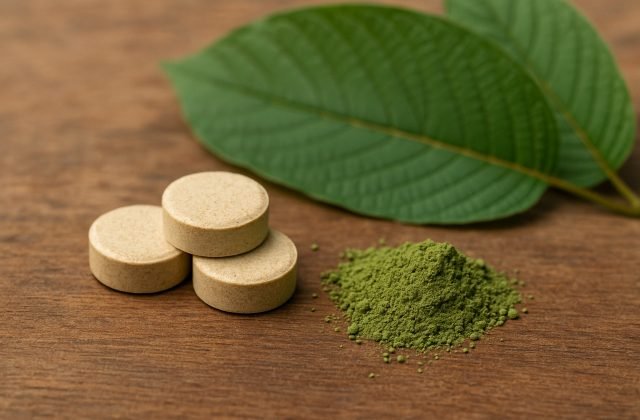
The compound pressed hydroxymitragynine (often referred to in literature as 7‑Hydroxymitragynine or “7-OH”) is increasingly coming into focus in both medical and regulatory circles. In this article we’ll unpack exactly what pressed hydroxymitragynine is, how it works in the body, what uses it may have (or claim to have), and the risks and considerations you should know.
What is Pressed Hydroxymitragynine?
Pressed Hydroxymitragynine refers to concentrated or “pressed” forms of the alkaloid 7-hydroxymitragynine (7-OH) which is derived from the plant Mitragyna speciosa (commonly called kratom) or produced via semisynthetic processes.
- 7-Hydroxymitragynine is a terpenoid indole alkaloid found in kratom leaves, though in very small amounts (often <2 % of total alkaloids) in raw leaves.
- The “pressed” term often implies the compound has been extracted, concentrated or processed into tablets, powders, or other formats rather than simply consumed as whole kratom leaf.
- It is also an active metabolite of another kratom alkaloid, Mitragynine, meaning when mitragynine is consumed it can be converted in the liver to 7-OH.
- Because of its potent activity on opioid receptors, regulatory bodies such as the U.S. Food & Drug Administration (FDA) have flagged it as an “emerging opioid threat.”
How Pressed Hydroxymitragynine Works in the Body
Mechanism of Action
Pressed Hydroxymitragynine / 7-OH exerts its effects primarily through interaction with opioid receptors in the central nervous system. Some key pharmacological points:
- It has a strong binding affinity to the µ-opioid receptor (MOR) compared with mitragynine. For example, one study reports Ki ~ 77.9 nM for 7-OH vs much weaker for mitragynine.
- After ingestion of mitragynine (the more abundant alkaloid in kratom), a portion is metabolized by hepatic enzymes into 7-OH, which then may mediate much of the analgesic/opioid-like effects.
- Some research has indicated 7-OH may act as a partial agonist at µ-opioid receptors and antagonist/modulator at δ-/κ-opioid receptors — though the full profile is still being studied.
- Pharmacokinetic data: in humans one study found the half-life for 7-OH to be ~4.7 h after single dose and ~24.7 h after multiple doses.
Effects on the Body
Some of the observable effects when 7-OH/pressed hydroxymitragynine is used:
- Analgesia (pain relief) via µ-opioid receptor activation. Early animal studies found antinociceptive (pain-blocking) effects.
- Euphoria, sedation or a “relaxed” feeling consistent with opioid-type compounds.
- Effects may vary widely depending on dose, formulation (raw vs concentrated), co-use of other depressants (alcohol, benzodiazepines) and user physiology.
- Because of opioid-like mechanisms, risks include respiratory depression, nausea, constipation, physical dependence and withdrawal.
Uses (Claimed and Investigated) of Pressed Hydroxymitragynine
Investigated Medical / Research Uses
While there are no approved medical uses of pressed hydroxymitragynine (or 7-OH) by regulatory authorities as of now, research has explored its potential.
- Because of its analgesic potency, there is interest in whether 7-OH (or derivatives) could lead to novel pain medications with different profiles than traditional opioids.
- Some preclinical work suggests altered opioid receptor signalling (e.g., not recruiting β-arrestin-2) which may theoretically reduce some adverse effects linked to classic opioids — though this is very preliminary.
- “Pressed hydroxymitragynine” the term aside, many use raw kratom or extracts for self-medication for chronic pain, mood enhancement, or opioid-withdrawal support — though this is unsupported by rigorous clinical trials.
Non-Medical / Consumer Use
In the consumer space, pressed hydroxymitragynine has been used (or marketed) for:
- Relief of chronic pain or discomfort
- Mood elevation or stress relief
- Enhancement of relaxation or sedation
- Self-managed reduction of opioid withdrawal symptoms
However, these uses come with significant uncertainty and risk, largely because dosage, formulation, purity, legality, and long-term effects are not well-controlled or understood.
Summary Table of Uses
| Use Type | Evidence Level | Notes |
|---|---|---|
| Pain relief | Preclinical/animal studies | No approved human indication yet |
| Mood/relaxation | Anecdotal/consumer reports | High variability, unregulated |
| Opioid-withdrawal support | Anecdotal/self-medication | Risk of dependence & relapse |
| Recreational use | Consumer market | High risk due to potency & unknowns |
Risks, Side Effects & Regulatory Considerations
Risks & Side Effects
Given its potency and opioid-like mechanism, pressed hydroxymitragynine carries several documented risks:
- Addiction/Dependence: Because it activates µ-opioid receptors, regular use may lead to tolerance, physical dependence and withdrawal.
- Respiratory Depression: Like other opioids, when combined with other depressants (alcohol, benzodiazepines) the risk of slowed or stopped breathing increases significantly.
- Overdose Potential: Some health alerts note serious illness and even deaths associated with products containing high levels of 7-OH.
- Quality Control Issues: Because many “pressed” or enhanced products may be mis-labeled, contaminated, or contain higher doses than claimed, consumers are at extra risk.
- Legal/Regulatory Risk: Use of unapproved substances may lead to legal issues depending on jurisdiction. For example, the FDA has recommended scheduling 7-OH.
Regulatory Status
- The FDA has issued documents identifying 7-hydroxymitragynine as an emerging opioid threat.
- In July 2025 the FDA recommended that certain 7-OH products be scheduled under the Controlled Substances Act (CSA) in the U.S. due to abuse potential.
- Some states or countries are moving to regulate or ban enhanced kratom products or high-potency 7-OH items.
- Natural kratom leaf (with trace 7-OH) remains legal (or at least less regulated) in many places, but pressed/enhanced 7-OH products are increasingly under scrutiny.
Safety Considerations & Tips
- If you are considering use (though we emphasise that there is no approved use), always check legality in your region.
- Avoid combining with other central nervous system depressants (alcohol, opioids, benzodiazepines).
- Be cautious about product sourcing: ask for third-party lab tests, verify dosage claims and check for contaminants.
- Start with lowest possible effective dose if under supervision, monitor for signs of intolerance or adverse effects (respiratory changes, sedation, cognitive impairment).
- If signs of dependence occur (increasing dose, consistent need, withdrawal symptoms) seek professional medical advice or addiction support services.
- If you’re using for pain or another condition, discuss with a qualified clinician — there may be safer, well-studied options available.
Real-World Scenario: Why “Pressed” Matters
Imagine two products:
- Whole-leaf kratom powder containing trace amounts (< 1 –2 %) of 7-OH, taken as a tea.
- A pressed extract tablet marketed as “extra-strength 7-OH” with a concentrated dose of 7-hydroxymitragynine.
While both derive from the same plant species, their risk profiles differ significantly:
- The pressed extract delivers a much higher dose of 7-OH, leading to stronger opioid-receptor activation, higher chance of sedation, respiratory risk, dependence.
- Regulatory attention is higher on such “enhanced” products than on standard leaf powders.
- Users may underestimate the difference: “It’s just kratom” vs “It’s a concentrated opioid-like extract.”
This scenario highlights why the term Pressed Hydroxymitragynine is important: it signals that the compound is concentrated or processed, not simply the plant in its traditional form.
Frequently Asked Questions (FAQ)
Q 1: Is Pressed Hydroxymitragynine the same as kratom leaf?
A: No. While kratom leaf (from Mitragyna speciosa) naturally contains some 7-hydroxymitragynine, the leaf includes many alkaloids and 7-OH is present in very small amounts. Pressed hydroxymitragynine refers to concentrated forms of that specific alkaloid (or its semisynthetic counterpart) often extracted or enhanced, and thus behaves differently from whole-leaf kratom.
Q 2: Can Pressed Hydroxymitragynine be used safely for pain relief?
A: There is no approved medical use of pressed hydroxymitragynine. While early research shows analgesic potential, human clinical trials, long-term safety data, and approved indications are lacking. Use for pain relief outside a controlled clinical context carries substantial risk and legal/regulatory uncertainty.
Q 3: What are signs of dependence or misuse of 7-hydroxymitragynine?
A: Signs may include: increasing doses to achieve the same effect, using it daily or frequently to avoid feeling unwell, experiencing withdrawal symptoms (restlessness, muscle aches, insomnia) when skipping it, mixing with other substances, neglecting responsibilities due to use.
Q 4: Is Pressed Hydroxymitragynine legal everywhere?
A: No. Legal status varies by country and region. In the U.S., while kratom leaf is still legal federally (though regulated in some states), 7-hydroxymitragynine (especially in concentrated form) is under regulatory scrutiny and many states are moving to ban or restrict it.
Q 5: How is Pressed Hydroxymitragynine produced?
A: It appears in two ways: (a) naturally in small amounts in kratom leaves; (b) formed metabolically in the body from mitragynine after kratom ingestion. Additionally, semisynthetic or extracted forms are produced (often high potency) via chemical processes.
Key Takeaways & Practical Guidance
- Pressed Hydroxymitragynine refers to concentrated forms of 7-hydroxymitragynine — a potent alkaloid associated with kratom.
- Neuropharmacologically it behaves like an opioid: strong µ-opioid receptor activity, analgesic/ sedative potential — but also high risk for dependence, respiratory effects, overdose.
- While there is interest in its therapeutic potential, there is no approved medical use at this time and use outside approved contexts carries significant risk.
- If encountering products marketed as “high-potency 7-OH” or “pressed hydroxymitragynine extract”, be especially cautious — dosage, purity, legality and adverse outcome risk are all elevated.
- Anyone considering use (for any reason) should consult a healthcare provider, verify legality in their jurisdiction, verify product testing, avoid high-risk co-use (e.g., alcohol, opioids, sedatives), and monitor for signs of misuse or dependence.
- For conditions such as chronic pain or opioid withdrawal, safer, well-studied alternatives likely exist — thereby reducing the need to rely on unapproved, high-risk substances.
In closing: while Pressed Hydroxymitragynine may seem like a “natural” or “plant-based” option because of its link to kratom, its pharmacology, potency, and risk profile align more closely with controlled opioids. It’s imperative to treat it with caution, scepticism and full awareness of the stakes.