
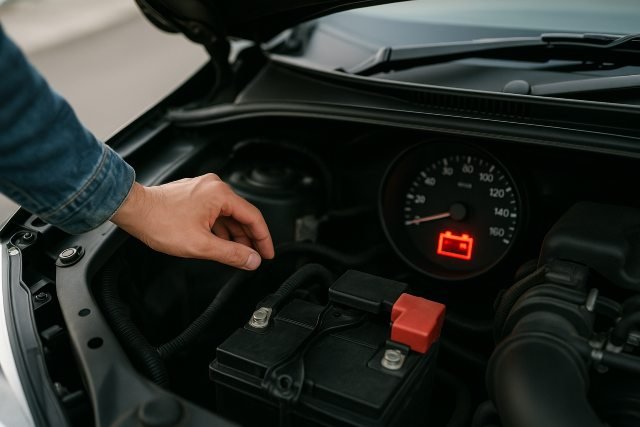
When the battery light on in car comes on suddenly while driving, it can feel alarming — especially if the vehicle was running fine moments before. This warning light is not just about the battery; it signals a problem in the charging system, which includes the alternator, voltage regulator, serpentine belt, wiring, and battery itself. Acting quickly can help you avoid getting stranded, prevent engine shutdown, and reduce repair costs.
This guide explains why the battery light turns on, what you should do immediately, and how to diagnose and fix the issue properly.
Understanding the Battery Light in a Car (What It Really Means)
Many drivers assume the battery light indicates a dead or weak battery. While the battery can be a culprit, the light actually warns you that the charging system is not delivering power properly.
Common components that trigger the battery warning light:
- Alternator malfunction
- Damaged or loose serpentine belt
- Corroded or loose battery terminals
- Faulty voltage regulator
- Weak or failing battery
- Blown fuses or faulty wiring
When the charging system stops supplying electricity, your car runs solely on battery power — which may last only 20 minutes to an hour depending on conditions.
What to Do Immediately When the Battery Light Comes On
1. Stay Calm — Your Car Won’t Die Instantly
The battery light doesn’t mean your engine will shut off instantly. It indicates you are now running on limited power.
2. Turn Off All Power-Draining Accessories
This helps conserve electricity so you can reach a safe location or repair shop. Turn off:
- Air conditioning
- Radio
- Heated seats
- Interior lights
- Phone chargers
- Rear defrost
- Headlights (if daytime and safe; keep them on at night)
3. Avoid Shutting Off the Engine
Once you turn the engine off, it may not restart.
4. Drive to the Nearest Safe Location or Mechanic
Head for:
- A repair shop
- Service station
- Auto parts store (they can test batteries/alternators)
- Well-lit parking area, if you need to wait for help
5. Watch for Additional Warning Signs
If any of these occur, pull over safely:
- Headlights dimming
- Power steering loss (common with belt failure)
- Burning smell
- Electrical failures (radio, dash lights, or windows die)
These are signs your car is close to shutting down.
Why the Battery Light On in Car Turns On: Detailed Causes
Below are the most likely causes, explained clearly.
1. Alternator Failure (Most Common)
The alternator charges your battery and powers your electrical system. When it fails, the battery cannot recharge.
Symptoms of a failing alternator:
- Dimming headlights
- Burning rubber/electrical smell
- Whining or grinding noise
- Electrical accessories shutting off
According to most automotive repair reports, faulty alternators account for over 60% of battery-light issues (source: AAA and RepairPal).
2. Serpentine Belt Problems
The alternator is powered by a belt. If that belt is:
- Loose
- Cracked
- Slipping
- Broken
…then the alternator cannot charge the battery.
Key sign: Sudden loss of power steering and overheating (same belt drives water pump on many cars).
3. Corroded or Loose Battery Terminals
Battery terminals can become:
- Corroded
- Dirty
- Loose
- Damaged
This disrupts electrical flow.
Look for: White or blue crust on the terminals.
4. Bad Battery
Even though the battery light usually means a charging system problem, a completely dead battery can trigger the light.
Signs include:
- Clicking sound when starting
- Slow cranking
- Battery more than 4–5 years old
5. Faulty Voltage Regulator
The voltage regulator keeps electrical output steady. If it fails, you may see:
- Flickering lights
- Erratic battery gauge movements
- Overcharging or undercharging
This component is often built into the alternator.
6. Wiring, Fuses, or Ground Issues
Modern cars rely on multiple electrical circuits. Problems include:
- Blown alternator fuse
- Broken ground strap
- Frayed wires
- Loose connectors
Even a small wiring fault can trigger the battery light.
How to Diagnose the Battery Light (Step-by-Step Guide)
If you’re comfortable with basic checks, here’s what to inspect.
1. Check the Battery Terminals
Look for:
- Corrosion
- Loose clamps
- Frayed cables
Clean terminals with baking soda and a brush.
2. Check the Serpentine Belt
Look for:
- Cracks
- Fraying
- Missing chunks
- Looseness
- Belt glaze (shiny appearance)
If the belt is not spinning the alternator, the battery light is guaranteed to stay on.
3. Test the Battery Voltage
Use a multimeter:
- 12.6+ volts = healthy battery
- 12.2–12.5 volts = weak battery
- Below 12.0 volts = discharged
Running engine voltage should be:
- 13.7–14.7 volts (indicates alternator is charging)
If the voltage does not increase when the engine runs → alternator issue.
4. Inspect the Alternator
Check for:
- Strange noises
- Loose connections
- Burnt smell
Auto parts stores can test the alternator for free.
5. Scan for Error Codes
A diagnostic scanner may reveal:
- Charging system errors
- Voltage regulator faults
- ECM communication issues
Is It Safe to Keep Driving With the Battery Light On?
Short answer: No.
You may have 20 to 90 minutes depending on the problem.
Driving long distances can lead to:
- Engine shutdown
- Loss of power steering
- Loss of power brakes
- Overheating (if belt also drives water pump)
- Permanent alternator or battery damage
How Much Do the Repairs Cost? (Quick Reference Table)
| Problem | Estimated Cost (USD) | Notes |
|---|---|---|
| Alternator replacement | $350–$900 | Depends on vehicle; labor-intensive |
| Serpentine belt | $50–$200 | Cheap fix, common issue |
| Battery replacement | $100–$250 | Higher for AGM or premium |
| Corroded terminals | $20–$50 | Often DIY |
| Voltage regulator | $150–$600 | Sometimes part of alternator |
| Fuse or wiring repair | $50–$300 | Depends on complexity |
How to Prevent the Battery Light from Coming On
- Replace the battery every 4–5 years
- Inspect belts every 10,000 miles
- Keep battery terminals clean
- Do annual charging system checks
- Avoid short trips (they don’t allow full charging)
- Watch for dimming lights or slow starts
FAQs (Featured Snippet Style)
Why did my battery light come on while driving?
It usually means the alternator is not charging the battery due to a failing alternator, bad belt, or electrical issue.
Can I drive with the battery light on?
Only for a short distance. The car will eventually shut down once the battery drains.
Does the battery light mean my battery is bad?
Not always. It signals a charging system issue, not necessarily a bad battery.
Battery light on but car still runs — is it normal?
Temporarily, yes. But the car is now running on battery power alone.
Conclusion: What to Do When the Battery Light On in Car Comes On Suddenly
When the battery light on in car comes on without warning, it’s a sign of a charging system failure that requires quick action. By turning off unnecessary electronics, avoiding engine shutdown, and safely driving to a repair shop, you can prevent breakdowns and expensive engine damage. Most causes — like alternator problems, bad belts, or poor connections—are fixable, and fast diagnosis can save you time and money.
Taking action early is the key to staying safe and keeping your vehicle running smoothly.