
If you’re planning to take an umpire test, you may be wondering what topics are covered, how difficult the exam is, and how you should prepare. Whether you’re pursuing cricket, baseball, softball, or another sport, the umpiring certification process requires a strong understanding of game rules, officiating mechanics, signals, decision-making, and on-field conduct.
This guide explains everything you can expect in an umpire test, including exam format, scoring, common rules questions, and proven tips to help you succeed on the first attempt.
What Is an Umpire Test?
An umpire test is an evaluation designed to assess your knowledge of the rules, regulations, and mechanics of officiating a particular sport. It typically includes:
- Rulebook knowledge
- On-field decision scenarios
- Mechanics and signaling
- Game management
- Sportsmanship and safety protocols
- Practical assessments or on-field evaluations
Most umpiring bodies — such as the ICC, USSSA, NFHS, or Little League — require candidates to pass both a written and practical exam before becoming certified.
Umpire Test Format: What You Can Expect
Although exact requirements vary by organization, most umpire tests follow a similar structure. Below is a breakdown of typical exam components.
1. Written Test (Rule Knowledge)
The written exam is the core of the certification process. It checks your understanding of:
- Official rulebook terminology
- Penalties and infractions
- Boundary and scoring rules
- Field layout and equipment regulations
- Umpire duties and responsibilities
Common Question Types
- Multiple-choice
- True/false
- Fill-in-the-blank
- Case study scenarios
Example (Cricket):
“If a ball hits the stumps at the non-striker’s end during a run, what is the correct ruling?”
Example (Baseball/Softball):
“Runner on first, one out. A fly ball is hit to left field and dropped. Is the infield fly rule in effect?”
2. Mechanics and Signaling Section
Umpires must master a range of visual and verbal signals. This section evaluates:
- Proper use of hand signals
- Timing of calls
- Positioning on the field
- Rotations and coverage responsibilities
You may be shown videos or illustrations and asked to choose the correct signal or mechanic.
3. Game Situation Scenarios
Scenario-based questions test real-world decision-making.
Example questions may include:
- Handling player disputes
- Dealing with interference or obstruction
- Overthrows or boundary situations
- Unsportsmanlike conduct
- Rain delays or match stoppages
You must select the correct ruling or explain the proper officiating mechanic.
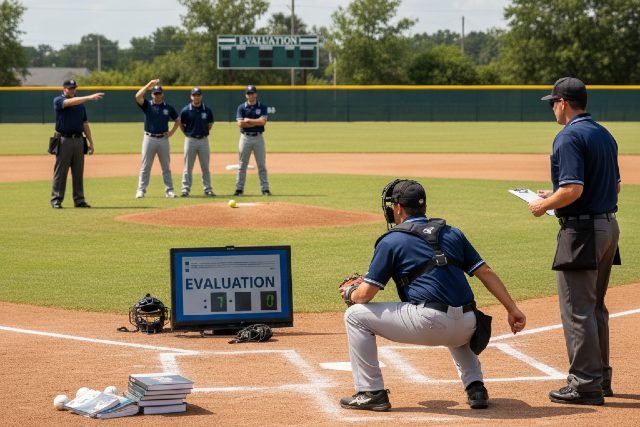
4. Practical On-Field Evaluation
Many umpire certification programs conduct a field test where you must:
- Demonstrate positioning
- Make real-time calls
- Use proper timing, voice, and communication
- Handle game flow and manage players
This is usually scored by senior or certified umpires.
5. Fitness or Vision Assessment (Varies by Level)
Elite or advanced umpire tests may include:
- Fitness tests (e.g., running, movement drills)
- Vision checks
- Reaction-time evaluations
These ensure you can perform physically on the field.
Rules Covered in an Umpire Test
Every umpire test focuses heavily on rule knowledge. Below are categories commonly included across multiple sports.
Basic Rules & Terminology
You must know the official rulebook definitions, such as:
- Boundary rules
- Dead ball and live ball
- Legal vs. illegal actions
- Scoring methods
- Player positions
Infractions and Penalties
Expect questions on:
- Warnings
- Penalties
- Disqualifications
- Fines or suspensions
- Mandatory reporting procedures
Umpire Duties & Responsibilities
The exam tests your knowledge of:
- Pre-game inspections
- Checking equipment
- Score verification
- Communication with officials
- Rule enforcement
- Match termination and reporting
Game Management
A key skill for umpires is managing players, coaches, and crowd behavior. Topics include:
- Conflict resolution
- Handling dissent
- Maintaining professionalism
- Safety protocols
Sample Umpire Test Questions
Here are sample questions you might encounter on an umpire test across several sports.
Multiple Choice
- A ball strikes the umpire while in play. What is the ruling?
- When can a batsman be given out obstructing the field?
- Which situations require an automatic dead ball?
True/False
- A substitute fielder may bowl immediately upon entering the game.
- Interference must always result in an out.
- A home run is allowed even if the batter misses touching first base.
Scenario-Based
“Runner on second base. Batter hits a ground ball to shortstop, who bobbles it and obstructs the runner attempting to advance to third. How should the umpire rule?”
These types of questions evaluate both rule knowledge and situational judgment.
How Umpire Tests Are Scored
Although scoring systems differ, most organizations use a combination of:
- Written exam score (minimum pass rate is often 70–85%)
- Practical assessment rating
- Mechanics evaluation
- Attendance at training or workshops
Advanced levels (e.g., state, national, elite) may require:
- Higher passing scores
- Annual re-certification
- Interviews or oral exams
How to Prepare for an Umpire Test: Proven Tips
Preparing for an umpire test requires structured study and real-world practice. Below are expert-recommended preparation steps.
1. Study the Official Rulebook Thoroughly
Your primary resource is always the rulebook for your sport. Download or purchase the latest version from:
- ICC (cricket)
- MLB/NFHS (baseball/softball)
- Local or national umpire associations
Highlight important sections and review rule changes from the latest season.
2. Learn Common Game Scenarios
Many questions on an umpire test revolve around tricky situations such as:
- Interference
- Obstruction
- Boundary situations
- Player appeals
- Illegal deliveries or pitches
Use case studies, online quizzes, and video breakdowns to strengthen situational judgment.
3. Practice Mechanics and Signals
Use mirrors or video recording to practice:
- Hand signals
- Call timing
- Voice authority
- Body posture
Incorrect mechanics may result in lost marks or failure in practical assessments.
4. Attend Training Sessions or Clinics
Most umpire organizations offer:
- Workshops
- Online training modules
- Mock tests
- On-field practice sessions
These sessions often include insights from senior umpires with years of experience.
5. Take Online Sample Tests
Sample umpire tests help you understand:
- Question style
- Time limits
- Rule application
- Weak areas needing review
Look for tests from certified organizations.
6. Improve Physical Fitness
Umpires must move quickly, maintain alertness, and remain focused throughout the match. Work on:
- Agility
- Endurance
- Flexibility
- Reaction time
Higher levels of umpiring require strong fitness levels.
7. Analyze Real Matches
Watching professional matches with an umpire’s perspective helps you:
- Understand rule applications
- Observe positioning and movement
- Learn proper signaling
- Improve decision-making
Pause and predict calls before seeing the umpire’s decision.
Common Mistakes Candidates Make in an Umpire Test
- Memorizing rules without understanding scenarios
- Ignoring mechanics and positioning
- Rushing through written questions
- Misinterpreting rulebook terminology
- Failing to study rule changes
- Overlooking sportsmanship and conduct rules
Avoiding these mistakes gives you a major advantage.
Frequently Asked Questions (FAQ)
1. How hard is an umpire test?
The difficulty depends on the certification level. Entry-level tests are manageable with preparation, while national-level exams require deep rule knowledge.
2. What is the passing score for an umpire test?
Most organizations require 70–85% on the written exam, plus a satisfactory practical evaluation.
3. Do I need prior experience?
Beginners can pass lower-level tests without experience, but higher certifications require on-field hours.
4. How long is the test?
Written exams typically last 60–120 minutes, while practical assessments may take several hours.
5. Is the umpire test open-book?
Most are closed-book, but some organizations allow open-book exams for lower levels.
Conclusion: Prepare Smart and Pass Your Umpire Test with Confidence
Preparing for an umpire test requires a combination of rulebook knowledge, practical mechanics, scenario understanding, and calm decision-making. By studying official rules, practicing signals, taking sample tests, and participating in training sessions, you can walk into your exam fully confident.
Whether you’re officiating cricket, baseball, softball, or another sport, the principles remain the same — accuracy, authority, fairness, and professionalism. With the right preparation, you can pass your umpire test on the first attempt and begin your journey as a certified umpire.