
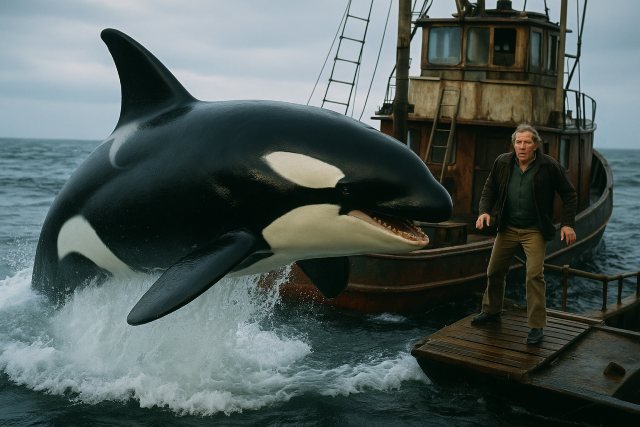
The 1977 movie Orca, often overshadowed by Jaws, has developed a passionate cult following over the decades. Despite mixed reviews upon its release, this emotionally charged tale of revenge between man and whale has aged into a thought-provoking, cinematic gem. Today, audiences revisit the film not just for its thrills, but for its themes of empathy, nature’s power, and moral reckoning.
The Legacy of Orca: A Forgotten Masterpiece Resurfacing
When Orca: The Killer Whale premiered, it was seen as part of the wave of “nature’s revenge” films of the 1970s. However, unlike its contemporaries, Orca told a story that was both tragic and profound. The movie Orca invites viewers to sympathize with the creature — a rare approach in an era dominated by monster flicks.
This emotional depth is precisely what keeps Orca relevant today. Modern audiences, increasingly aware of animal intelligence and environmental issues, view the killer whale not as a monster but as a symbol of nature’s retribution and human guilt.
Emotional Storytelling that Transcends Time
At its core, the movie Orca is not about terror — it’s about tragedy. The story of Captain Nolan (played by Richard Harris) and the vengeful killer whale resonates because it mirrors human emotions: grief, revenge, and redemption.
Key elements that still captivate audiences include:
- Empathy for the antagonist – Few films successfully evoke sympathy for a “villain” as effectively as Orca does.
- Human vs. nature morality – The movie challenges the viewer to question humanity’s exploitation of wildlife.
- Cinematic poignancy – With Ennio Morricone’s haunting score and breathtaking seascapes, Orca feels almost poetic.
How Orca Stands Apart from Jaws
While Jaws depicted a primal predator, the movie Orca gives its titular creature intellect and emotional depth. Critics and fans alike have pointed out that Orca is not simply “another shark movie” but rather a morality tale dressed as a thriller.
| Aspect | Jaws | Orca |
|---|---|---|
| Tone | Horror/Adventure | Tragic Drama |
| Perspective | Human-centered | Whale-centered |
| Message | Survival against nature | Consequences of human cruelty |
This distinction helps Orca stand on its own, earning respect as an underrated ecological allegory rather than just a derivative film.
Environmental Relevance in Modern Times
Decades later, the movie Orca feels more relevant than ever. In the age of climate change and oceanic conservation, its message resonates deeply:
- The film depicts nature’s balance disrupted by human greed.
- It portrays killer whales as sentient beings, anticipating real-world findings about their intelligence and emotional complexity.
- The theme of environmental justice aligns with today’s ecological movements and documentaries like Blackfish.
According to marine biologists, orcas demonstrate family loyalty, emotional intelligence, and complex communication — traits the movie Orca dramatized long before science confirmed them.
Cinematic Brilliance and Cultural Influence
Even from a technical perspective, the movie Orca is impressive. Cinematographer Ted Moore (known for early James Bond films) captured the stark beauty of the sea, while Morricone’s score remains one of the most haunting in film history.
Pop culture has also begun to reappraise Orca. Film critics and YouTube essayists often cite it as an early example of “eco-horror with heart.” The movie has inspired countless discussions, fan edits, and even conservationist comparisons to Free Willy and The Cove.
Why Audiences Keep Coming Back to Orca
What makes the movie Orca so captivating decades later? It’s the combination of spectacle and soul. Unlike many monster films, Orca offers a deeply human emotional experience through an animal’s perspective.
- It evokes empathy rather than fear.
- It critiques human hubris in exploiting nature.
- It explores grief and vengeance with Shakespearean depth.
In a way, Orca feels like a mirror held up to humanity — reminding us that every action toward nature has consequences.
Frequently Asked Questions About Orca (For Featured Snippet Optimization)
Is Orca based on a true story?
No, Orca is a fictional story, though it was inspired by the popularity of Jaws and growing interest in marine wildlife. However, its depiction of orca intelligence is rooted in real science.
Where was Orca filmed?
The movie Orca was filmed primarily in Newfoundland, Canada, with additional scenes shot in Malta and California to capture the oceanic atmosphere.
Why did Orca receive mixed reviews?
At release, critics viewed Orca as a Jaws imitation. However, its emotional storytelling and ecological message have led to a modern critical reevaluation.
What makes Orca different from other creature features?
Unlike many 1970s thrillers, Orca focuses on the emotional intelligence and grief of the whale, making it more of a tragic drama than a horror story.
Conclusion: The Enduring Power of the Movie Orca
Decades after its debut, the movie Orca continues to resonate because it combines emotional storytelling, environmental consciousness, and cinematic artistry. It’s not just a tale of vengeance — it’s a timeless reminder of humanity’s complex relationship with nature.
As audiences rediscover this classic, Orca stands as both a warning and a tribute: a story about what happens when we underestimate the natural world’s capacity for feeling, justice, and revenge.